
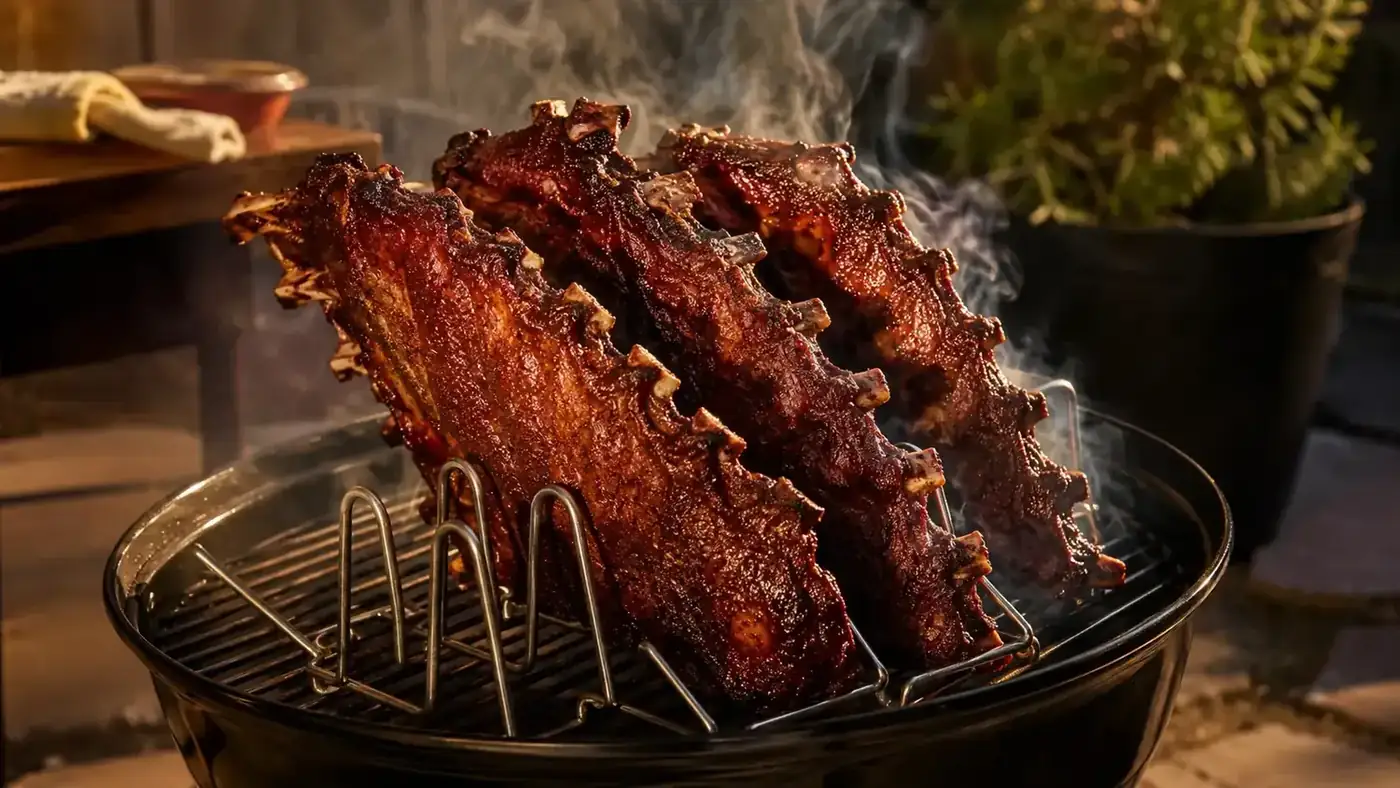
I have been making ribs on my backyard charcoal kettle for about 25 years, and for the first decade I did what everybody told me to do: smoke them flat for a couple hours, wrap them tight in foil, finish them low and slow, unwrap, and glaze. The 3-2-1 method. It works. I want to be clear about that up front. My family ate every last rib I made that way, and nobody complained once. But I was always fighting for grate space, always nursing the bark back in the final 30 minutes, and always wishing I could feed twice as many people without cooking two separate rounds.
Then about two summers ago, a neighbor showed up at a cookout with a stainless steel rib rack, the ACMETOP Extra Long model, one of those vertical stands that holds the slabs on their edges. She was cooking three full racks at once on a kettle that was barely bigger than mine. The ribs came off with a dark, crackly bark I had never managed before, and the smoke flavor went all the way through the meat instead of just sitting on the surface. That was the day I started questioning everything I thought I knew about cooking ribs. Now, after two full seasons of running both methods back to back, here is the honest comparison.
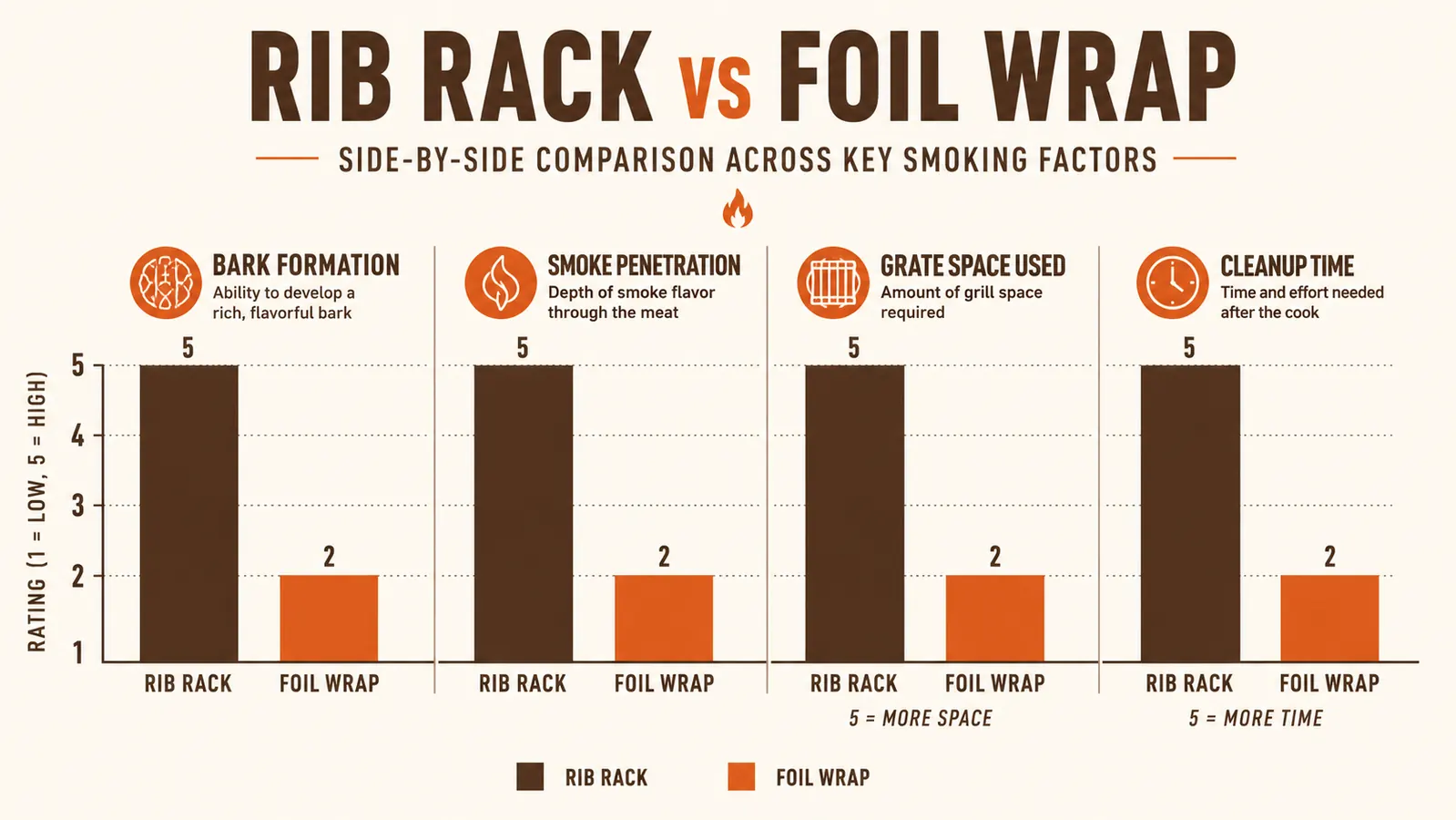
| Rib Rack (ACMETOP) | Foil Wrap Method | |
|---|---|---|
| Grate Space Used | One small footprint for up to 3 full racks | Each rack laid flat takes up the full grate |
| Capacity per Cook | 3 full racks simultaneously on most 22" kettles | 1 to 2 racks max on a standard grill |
| Smoke Exposure | All surfaces open to smoke the entire cook | Sealed in foil for the middle 2 hours; smoke only reaches before and after |
| Bark Formation | Deep, dry bark on both sides and the tips | Steam inside the foil packet softens bark; must recover it in the final unwrapped phase |
| Moisture Retention | Good with proper temp control (225-250F); tips can dry faster | Excellent; foil traps all juices and steam |
| Cleanup | Rinse the rack, no foil waste | Foil is single-use; generates a greasy packet every cook |
| Cost to Get Started | Budget-friendly one-time for a stainless rack | Heavy-duty foil; modest cost per cook, adds up over a season |
| Learning Curve | Low: set the rack, load the ribs, manage your temperature | Moderate: timing the wrap phase, sealing it properly, managing steam without overcooking |
| Works Without a Lid | No; needs a closed lid to build a smoke chamber | Yes; the foil packet is its own sealed chamber |
Where the Rib Rack Wins
The biggest win for the rib rack is surface area. When your ribs stand upright, both the meat side and the bone side get hit by smoke and heat from start to finish. Foil wrap cuts that exposure in half, literally, because you seal everything inside a packet right when the bark is starting to set. I always found myself trying to recover that bark in the final 30 minutes of the unwrapped phase, and it was a coin flip whether it came back fully or turned out tacky.
The ACMETOP Extra Long Stainless Steel Rib Rack holds up to three full racks in a footprint about the size of a shoebox. On my Weber 22-inch kettle, that means I can feed 12 people off a single cook instead of running two or three separate sessions. That alone changed how I host cookouts. I used to start ribs at 7 in the morning to have enough for a 1 p.m. crowd. Now I start at 9 and I am still ahead of schedule. After more than 3,300 Amazon ratings at 4.6 out of 5 stars, it seems like a lot of other backyard cooks landed in the same place.
Cleanup is also much simpler. Heavy-duty foil is not free, and a big greasy packet after every cook is just more waste to deal with. The stainless rack goes in the sink, gets a scrub, and dries on the counter. No consumables, no landfill contribution every Sunday.
Ready to cook 3 racks at once with deeper bark?
The ACMETOP Extra Long Stainless Steel Rib Rack has held up through two full seasons of my weekend cookouts. Rated 4.6 stars from more than 3,300 backyard cooks.
Amazon Check Today's Price on Amazon →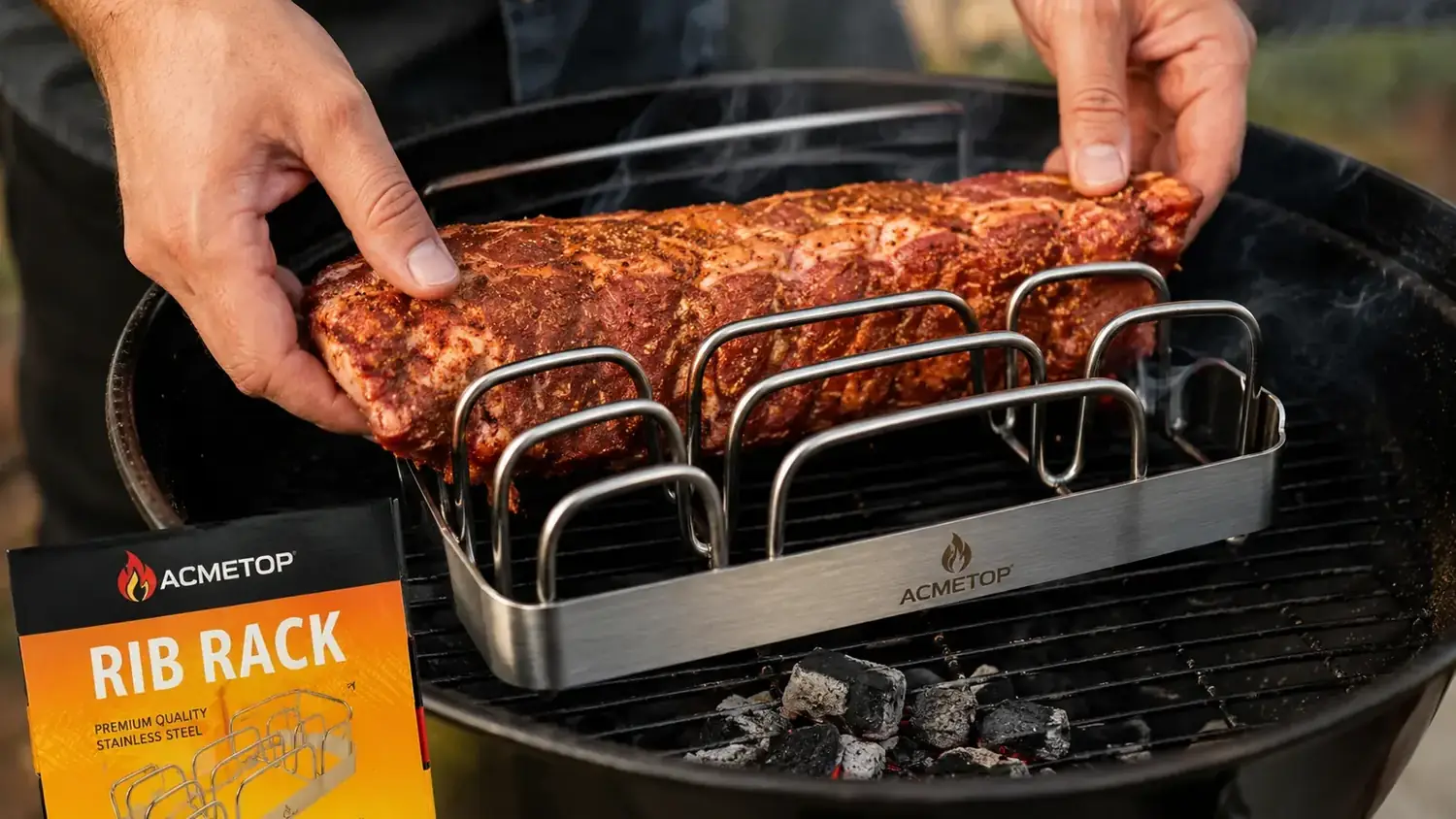
Where Foil Wrap Wins
I am not going to pretend foil wrap has no advantages, because that would not be honest and it would not help you cook better ribs. The foil wrap method produces incredibly moist, tender ribs every single time. The steam that builds up inside that packet essentially braises the meat from the inside, which breaks down connective tissue and collagen in a way that a dry smoke environment has to work a lot harder to match. If you are cooking St. Louis-cut spare ribs and you absolutely need fall-off-the-bone texture for a crowd that expects that style, foil wrap gets you there reliably with less temperature babysitting.
Foil wrap is also more forgiving if your fire runs hot. If your temperature spikes to 275 or even 300 for a while, the foil packet acts as a buffer and the ribs inside still come out fine. Upright on a rack, a temperature spike will dry your rib tips and edges fast, because there is nothing protecting them. That is the one scenario where I genuinely reach for foil: a charcoal cook with unpredictable airflow, a windy day, or when I am distracted by a crowd and cannot babysit the vents.
The Bark Question Nobody Asks Until It Is Too Late
Bark is the dried, mahogany-colored crust that forms on the outside of smoked meat when the rub proteins and sugars bond with smoke particles over several hours of dry heat. It is not a coating. It is a transformation. And it is the first thing to disappear when you seal meat in foil. The steam that makes foil-wrapped ribs so tender is the exact enemy of bark. You can get a partial bark back after you unwrap and return the ribs to direct heat or high indirect heat for 20 to 30 minutes, but it never quite matches what a continuous dry smoke environment builds from the start.
When I serve ribs off the rack, my sister-in-law always asks what I did differently. The answer is just time plus airflow. Standing the ribs upright keeps fat and juices from pooling on the surface and washing the rub off, which is a real problem when you lay ribs flat. The fat renders down the sides of the slab and drips clear. The rub stays put. The bark gets dark and crackly. That is not a competition trick. It is just physics.
Standing the ribs upright keeps fat from pooling on the surface and washing the rub off. The rub stays put. The bark gets dark and crackly. That is just physics.
Capacity: The Real Reason I Switched for Crowd Cooking
My dad used to do ribs for family reunions, and he would start cooking the night before. Two racks flat on a big kettle was about all he could manage at one time, so by the time he had enough for 20 people, it was a 12-hour operation. I watched him stand over that grill more than once while the party was going on around him. He was the cook and the guest at the same time, always in two places at once. I inherited the grill and the problem right along with it, and for years I just accepted that ribs for a crowd meant a very early morning.
Three racks standing upright in the ACMETOP rib rack take up less grate space than one rack laid flat. I confirmed this by measuring: the rack footprint is roughly 13.5 inches long by 4.5 inches wide on my 22-inch kettle, leaving the entire outer ring of the grate open for indirect heat management and a couple chunks of hickory wood. I can put a drip pan underneath to catch fat and keep the cook cleaner. I can reposition charcoal without moving the ribs. The whole operation is tighter and more controlled start to finish.
What Happens When You Combine Both Methods
Here is something I have started doing that splits the difference: I smoke the ribs standing upright in the rack for the first two and a half to three hours to build bark and maximize smoke penetration. Then I lay them flat, wrap them loosely in foil with a couple tablespoons of apple cider vinegar, and let them steam through the final hour. The result is a rib with a real bark and fall-off-the-bone tenderness. You do not have to pick a side completely. The rack handles the smoke phase, and the foil handles the moisture phase, and both do their jobs without fighting each other.
This hybrid approach does mean you still buy foil, but only one sheet per slab and only occasionally, not every single cook. Most of my backyard weekend sessions skip the wrap entirely now because the people I feed prefer a firmer bite and stronger bark. The only time I go full foil-wrap is when I am serving a table that includes kids, older guests who prefer very tender ribs, or when I know the cook is going to run long because I got a late start.
Who Should Buy the Rib Rack
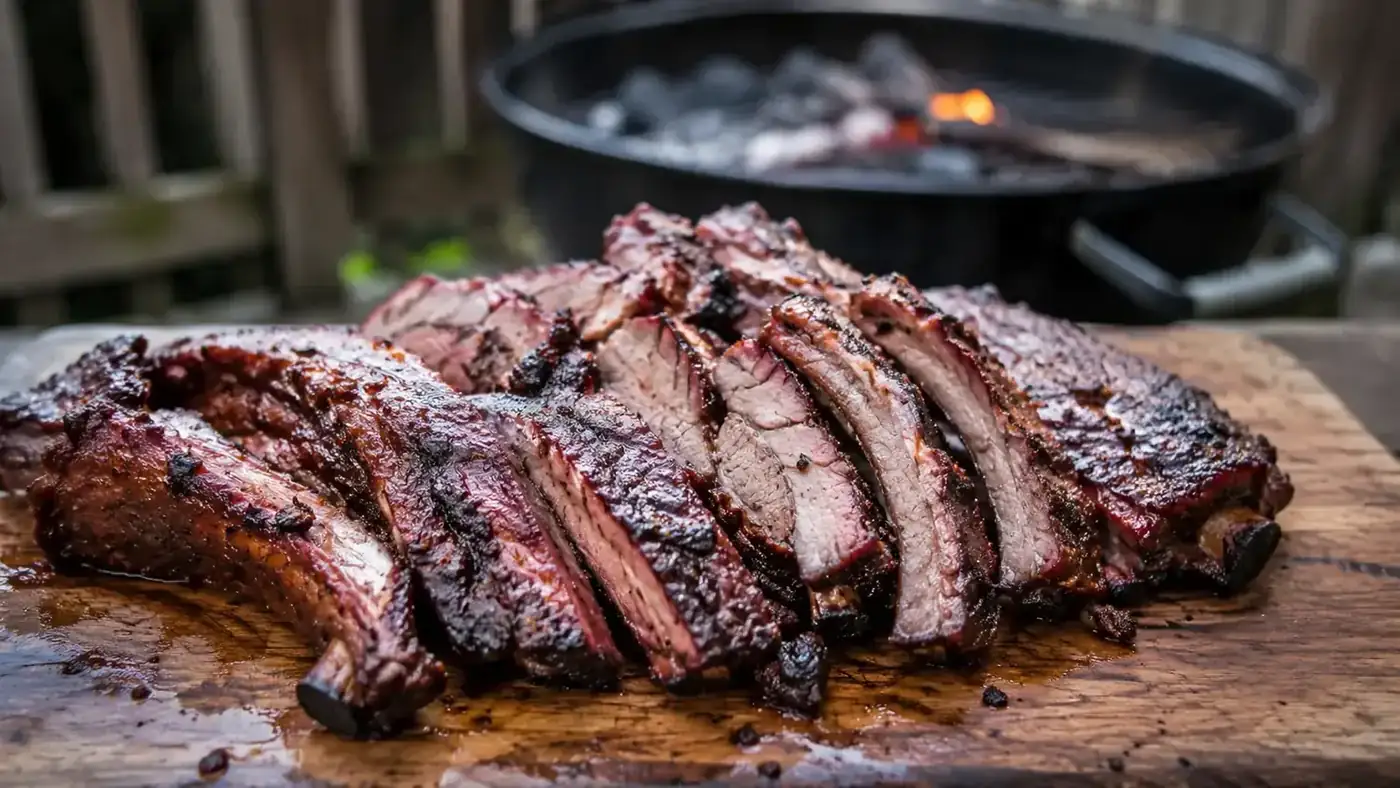
If you regularly cook for more than four or five people, the rib rack pays for itself in convenience on the very first cook. You get more food on the grill at once, better bark, and a cleaner setup without the foil waste. If you care about smoke flavor going all the way through the meat rather than just sitting on the surface, the rack is a better tool for the job. If you cook on a gas grill with reliable temperature and at least 400 square inches of grate space, you can run two of these racks side by side and feed a serious crowd without staggering your cooks. I also want to mention the rack is useful for more than just ribs. I have used the ACMETOP for bone-in chicken halves, whole fish, and even thick pork loin roasts. It is a vertical roasting stand as much as it is a rib rack, and that versatility makes it easy to justify even if you only smoke ribs a few times a summer. For a detailed look at long-term wear and season-by-season performance, see my full rib rack review.
Who Should Stick With Foil Wrap
If you are cooking for two or three people on a smaller grill, foil wrap is perfectly fine and gives you consistently tender results without any extra gear. If your grill runs hot and unpredictable, or if you tend to multitask away from the grill during a long cook, the foil packet gives you a safety net that a dry rack setup does not. And if your crowd specifically prefers fall-off-the-bone texture above all else, the foil method is the more reliable path to that result. Some people genuinely do not like bark, which is a choice I do not understand but I respect. If that is your table, stick with foil and do not overthink it. If you want to see exactly how the rib rack handles these tradeoffs over many cooks, the honest review of the ACMETOP rib rack goes deeper on the specifics.
Three racks, one footprint, zero foil waste on every cook
The ACMETOP Extra Long Stainless Steel Rib Rack is stainless steel, fits most standard 22-inch kettle and gas grills, and is budget-friendly. Rated 4.6 out of 5 stars from more than 3,300 backyard cooks.
Amazon Check Today's Price on Amazon →