
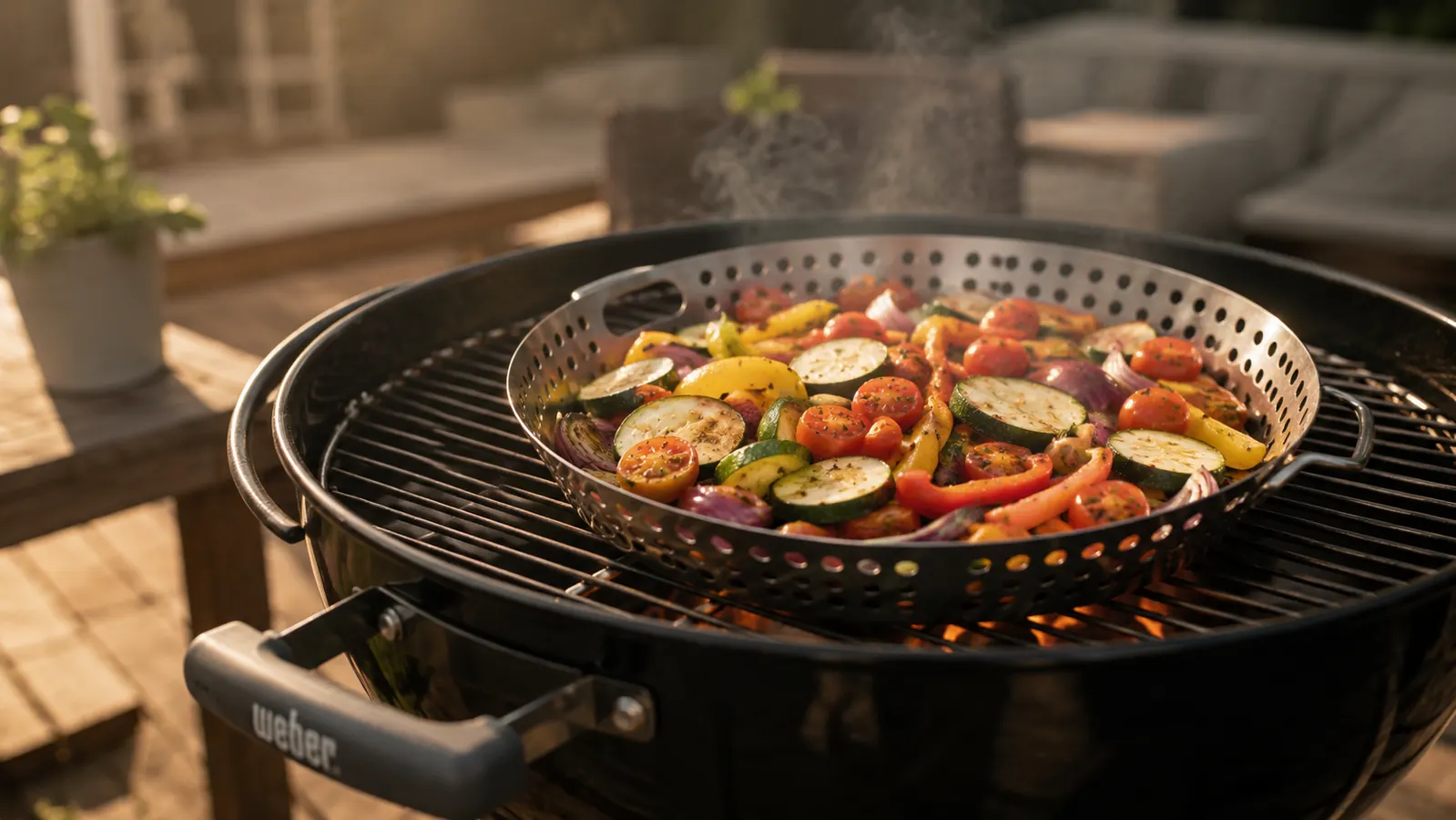
My first summer with a grill basket was the summer I stopped apologizing for my vegetables. Before that, I had a reliable system: cut the zucchini thick so it would not fall through the grates, accept that I was going to lose at least a third of the asparagus anyway, and just quietly skip shrimp at big cookouts because fishing twelve of them out of the bottom of the firebox was not how I wanted to spend a Sunday afternoon. My dad never used a basket. His dad never used a basket. I figured it was just how things were. Then I picked up the Weber Deluxe Grilling Basket two summers ago and realized I had been making the whole thing harder than it needed to be.
I am Sue Hartline, I grill out of Abilene, Texas, and I have been cooking for crowds on a backyard grill for going on 25 years. I am not competing at anything. I just want good food on the table for however many people show up on a Saturday, and I want the cleanup to not take longer than the cook. That is the lens I use for everything, including this basket. I bought mine off Amazon about two seasons back and I have put it through everything from weeknight squash to a Memorial Day spread with sixty pounds of mixed vegetables and two pounds of Gulf shrimp. Here is what I found.
The Quick Verdict
The Weber Deluxe Grilling Basket is the most consistently useful piece of gear I own after the grill itself. Sturdy stainless steel, a locking lid that actually works, and two full seasons of use with no rust or warping. It falls short on one thing: the small hole pattern is not ideal for high-moisture foods that need more airflow to char properly. But for everything else, I reach for it every single week.
Amazon Check Today's Price →If you have lost even one shrimp to the grates this summer, this basket pays for itself on the first cook.
The Weber Deluxe Grilling Basket is affordably priced right now. For a stainless steel piece that handles vegetables, shrimp, fish, and small cuts without losing a single piece, that is one of the best buys in backyard grilling.
Amazon Check Today's Price on Amazon →How I've Used It: Two Seasons Worth of Real Cooks
I want to be clear about what two seasons means at my house. That is roughly March through October, two to three times a week, in West Texas heat that can hit 105 degrees in July. The basket lives outdoors on the side shelf of my gas grill when it is not in use. It has been rained on, it has sat in the sun for weeks at a stretch, and it has been through more cycles of high heat and cold water rinse than I want to count. I mention this because a lot of reviews test a product three times and call it a long-term review. Mine is not that.
The foods I have cooked in it most often are zucchini and squash rounds, asparagus spears, bell pepper strips, red onion wedges, cherry tomatoes, baby portobello mushrooms, Gulf shrimp, salmon fillets cut into portions, and a few rounds of diced chicken thigh when I wanted a stir-fry-style char. I have also used it for thick-cut potato rounds that would have taken forever laid flat on the grate. Each of those foods has its own personality on the grill, and the basket handles most of them well and one of them just adequately. I will get to the one that is just adequate in a minute.
Setup is about thirty seconds. You open the locking lid, load the food, snap it closed, set it on the grate over direct or indirect heat depending on what you are cooking, and flip the whole basket every few minutes. That is the full procedure. No skewers to thread, no foil packets to fold, no prayers to the grill gods that your shrimp will stay put. I flip mine with my GEEKHOM silicone gloves since the handle gets plenty warm on a hot cook, but the handle is long enough that you are not hovering your hand directly over the fire.
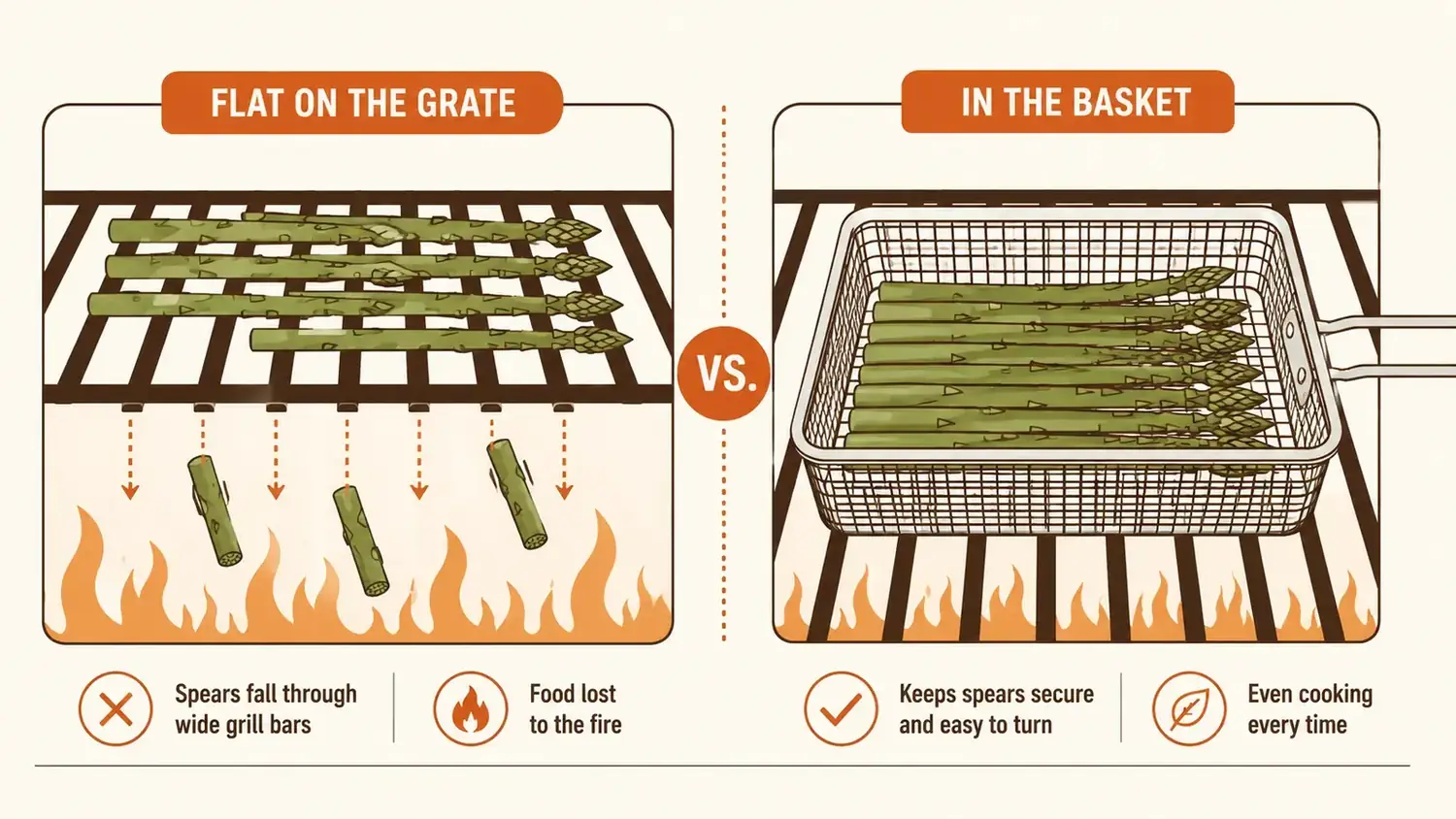
Build Quality: What Two Seasons Actually Do to Stainless Steel
The Weber Deluxe Grilling Basket is made from stainless steel wire with a small square hole pattern. The wire is noticeably heavier gauge than the cheap baskets I tried before this one. I went through two of those cheaper models in about eight months combined. One of them warped on the bottom so badly after three uses that it would rock on a flat surface. The other one developed rust spots along the welds within a single season, even though I was rinsing and drying it after every cook. Both of them had locking mechanisms that felt flimsy from the start and got worse fast.
After two full seasons, my Weber basket looks like it has been used but it does not look damaged. The locking lid clip is still firm. I have not found a single rust spot anywhere on the wire or the welds. The bottom has not warped. When I set it on the grate it sits flat, which matters more than it sounds because an uneven basket means your food pools toward one side and you lose the even char you are going for. The handle has a slight patina from heat exposure but nothing structural has changed about it.
Weber's reputation in grilling gear is built on the idea that they make things that last. I was a little skeptical that would apply to a budget basket versus a premium kettle grill. But in this case, the quality difference compared to no-name alternatives is real and noticeable. The price difference between this and a cheap basket is modest. Over two seasons, the Weber is still in daily rotation while both of my cheap baskets are in the trash.
The Small Hole Pattern: Biggest Asset and One Limitation
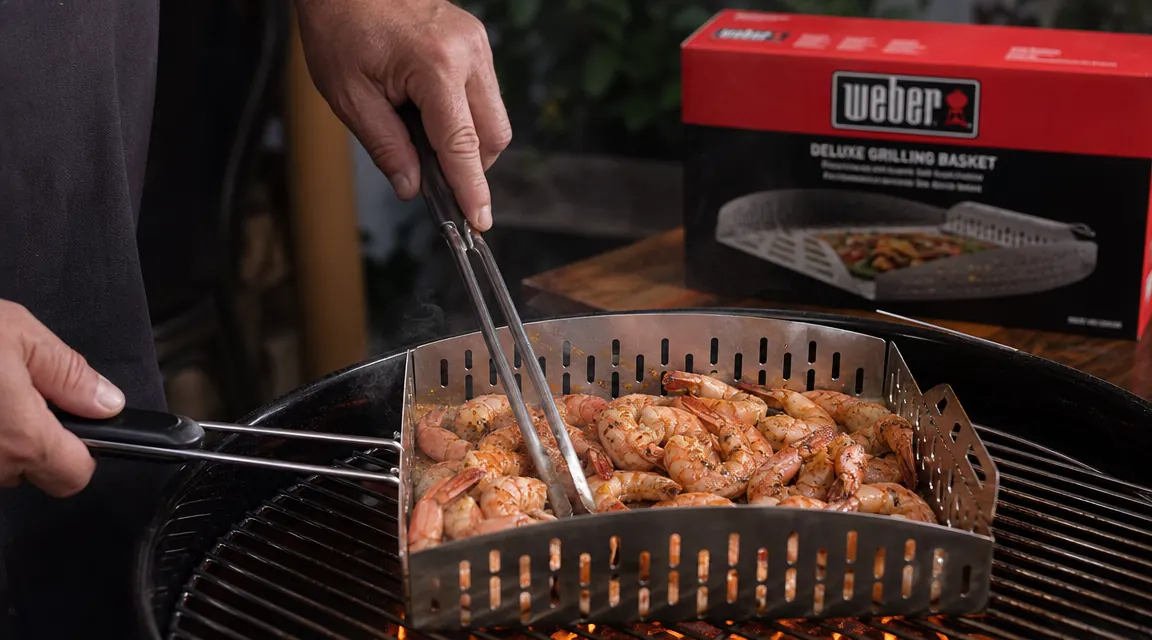
The thing that defines this basket more than anything else is its small hole pattern. Each opening in the wire grid is small enough to hold cherry tomatoes without them slipping through. That sounds like a minor thing until you have watched a full pint of cherry tomatoes slowly disappear through a coarser-mesh basket one by one while you stood there with tongs and couldn't do a thing about it. The small holes also mean shrimp in the 21/25 count range stay put with zero drama, asparagus spears of any diameter are contained completely, and pieces of fish that start to flake as they cook do not fall apart into the fire.
The limitation is airflow. Because the holes are small, moisture-heavy vegetables like zucchini and yellow squash do not breathe as freely as they would on a coarser mesh. If I want a deep char on those vegetables, I need higher heat and a longer cook time than I might on a more open basket. If the grill is running hot, this is not a problem at all. On a cooler indirect-heat setup, I sometimes end up with vegetables that are cooked through but softer than I wanted with less of that caramelized exterior. It is not a dealbreaker by any stretch, but it is worth knowing going in.
Two seasons of West Texas summer heat, and not a single rust spot on the wire or the welds. I threw away two cheaper baskets in less time than that.
Cleaning Reality: Honest About the Stuck-On Bits
The Weber basket is not the easiest grill accessory to clean. The small hole pattern that keeps your food in also traps small bits of food after the cook. Cherry tomatoes that burst, fish skin that sticks, the sugary residue from teriyaki-glazed vegetables. I want to give you the honest picture here because some reviews make it sound like a quick rinse takes care of everything. That has not been my experience.
What actually works for me is a two-step routine. Right after I take the food off, while the basket is still hot, I set it back on the grill for another five minutes over high heat. That burns off the loose residue. Then I let it cool to the point where I can handle it and scrub it under hot water with a stiff-bristle brush. About 80 percent of cooks that is enough and the basket comes out clean in under five minutes. The other 20 percent, usually anything with a sugary glaze or tomatoes that burst, I soak the basket in hot soapy water for ten minutes first and then scrub. I do not put it in the dishwasher. The dishwasher gets it technically clean but the high-mineral water here in Abilene left water spots that started to look like surface rust until I dried it immediately. Hand wash and air dry works better.
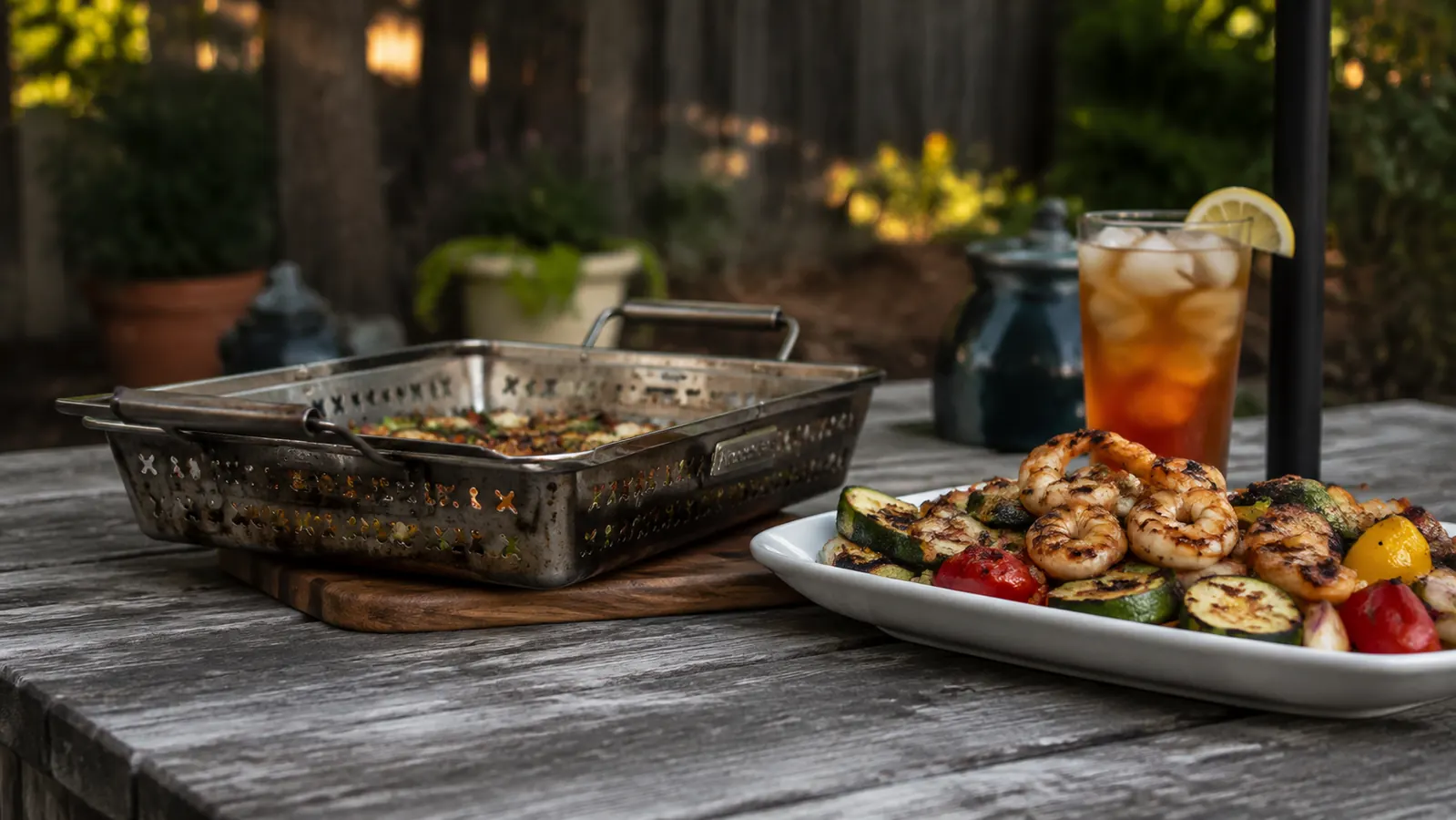
Comparing It to What I Used Before
Before the Weber, I tried two things. The first was a cheap no-brand basket from the end of an aisle at a big-box hardware store. It was budget-priced, lasted one season, and warped badly enough that food cooked unevenly by the end. The second was a set of grill mats, which I thought would solve the fallen-food problem. The mats worked fine for delicate fish, but they block the smoke and char flavor almost completely. A grill mat gives you food that tastes like it was cooked in a pan. If I wanted that I would use my cast-iron skillet. The whole point of grilling vegetables is that flame and smoke contact. The basket gives you both, since the food sits directly in the gaps between the wire.
I also tried a Grillaholics basket for about three months before landing on the Weber as my everyday choice. If you want a more complete breakdown of how those two compare on hole size, handle design, and cleanup, I put together a full head-to-head on the Weber vs Grillaholics Basket comparison page. Short version: the Grillaholics has larger holes that give better char on squash but loses shrimp and cherry tomatoes. I grill more shrimp than squash, so the Weber won.
Foods That Shine and Foods That Are Just Okay
After two seasons I have a pretty clear mental list of what this basket was made for and what works but is not ideal.
The basket shines with shrimp. I can load a full pound of 21/25 Gulf shrimp, seasoned with olive oil, garlic, and a little smoked paprika, snap the lid shut, and flip the whole basket every 90 seconds for about six minutes. Every shrimp gets even heat. Not one falls through. The result is better than anything I got from skewers because the heat reaches all sides instead of just the two sides pressed against the skewer. Fish portions are the same story: salmon fillets that would stick and break apart on bare grates stay together in the basket and peel off the wire cleanly once they have cooked through. Asparagus is almost embarrassingly easy. I load it in at any diameter, roll it around a couple of times, and it comes out with the char marks and tender-crisp texture my family loves.
Where the basket is just adequate: thick wedges of romaine or cabbage that need high direct heat for a fast char. Those work better directly on the grate where the whole surface area can contact the iron. Also large portobello mushroom caps. The caps are wider than the basket's interior, so I have to cut them in half to fit, which means more surface for food to stick. They cook fine but they are not the basket's best use. For everything else on the grill-vegetable spectrum, especially the small and slippery stuff that falls through bare grates, this basket is the right tool. If you want a complete guide on getting the most out of it with different vegetables and cooking times, my guide to grilling vegetables without losing them covers the full approach.
What I Liked
- Stainless steel held up through two full seasons with zero rust and no warping
- Small hole pattern keeps shrimp, asparagus, cherry tomatoes, and fish portions contained with no losses
- Locking lid mechanism is still firm after dozens of cooks, nothing loose or rattling
- Long handle keeps your hands clear of the heat and works with silicone gloves
- Flips as one unit so there is no fussing with individual pieces mid-cook
- Direct grill contact through the wire gives you real smoke and char flavor, unlike grill mats
Where It Falls Short
- Small holes trap food residue and require a scrub after sticky or sugary cooks
- Interior volume is not huge, so for feeding twelve or more people you are doing multiple batches
- Low airflow through the tight mesh means moisture-heavy vegetables need higher heat to char properly
- Large whole mushroom caps and heads of lettuce do not fit without cutting them down first
Who This Is For
This basket is for the backyard cook who wants to stop losing food to the fire and start actually enjoying grilling vegetables and seafood. If you have ever skipped shrimp at a cookout because they are too much trouble on bare grates, this is the fix. It is also for anyone who has tried grill mats and hated the way they mute the smoky flavor. The Weber basket lets the fire do its job while keeping your food where it belongs. If you cook for a family of four to eight people, the basket capacity works perfectly for a side or a main. For larger crowds, you will run two or three batches, which is fine since the second batch goes on while you are plating the first.
Who Should Skip It
If your main goal is a deep, aggressive char on thick-cut squash or eggplant, a basket with a more open mesh might serve you better, since the airflow on this one is limited by the small hole size. Cooking mostly whole portobello caps or large wedges of romaine? Again, this basket was designed for smaller and more mobile pieces and it shows. And if you are feeding a crowd of twenty or more without wanting to run multiple batches, you may want two baskets or a larger rectangular model. This is a tool that does specific things extremely well. Match those things to your cooking and it is probably the last basket you will ever need to buy.
Two seasons in and I would buy this exact basket again without a second thought.
The Weber Deluxe Grilling Basket holds up, keeps your food contained, and gives you the smoke and char flavor that grill mats kill. Check what it is going for today and see if it fits your cookout lineup.
Amazon Check Today's Price on Amazon →