
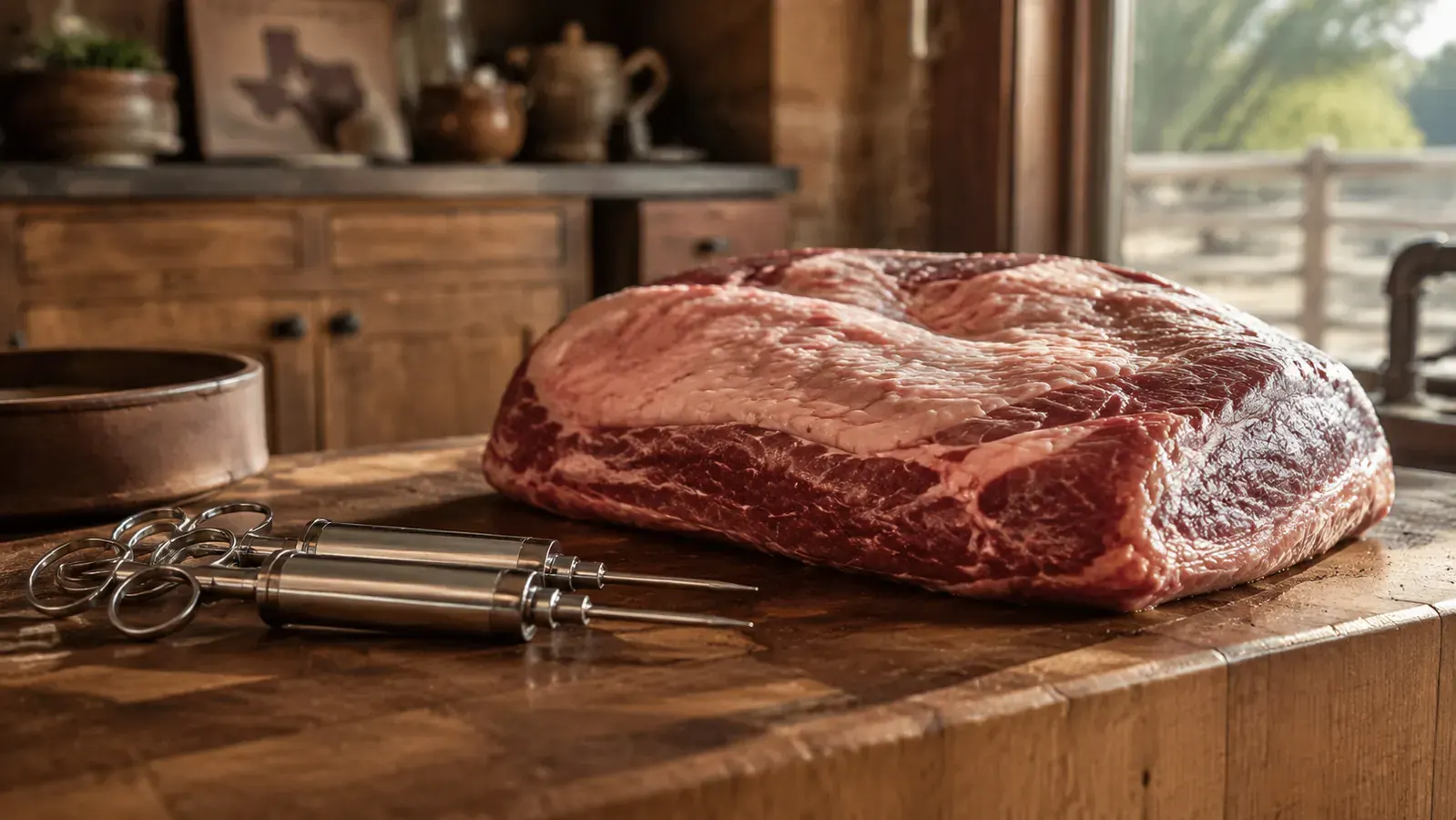
The short answer is the Ofargo Stainless Steel Meat Injector. If you want the longer version, keep reading, because the way these two injectors fail is completely different and knowing which failure mode you can live with matters more than the price gap.
I have been injecting briskets, pork shoulders, and whole chickens for going on six years now out here in West Texas. I started with a plastic-barrel Cajun Injector because it was on the peg hook at the hardware store and it cost about eight bucks. I used it until it cracked. Then I bought another one. Then I found the Ofargo kit, used it through a full summer of Saturday cooks, and never went back to plastic. Here is what I learned from running both.
| Ofargo Stainless | Cajun Injector | |
|---|---|---|
| Barrel Material | Food-grade 304 stainless steel | BPA-free plastic (polypropylene) |
| Barrel Capacity | 2 oz (60 ml) | 2 oz (60 ml) |
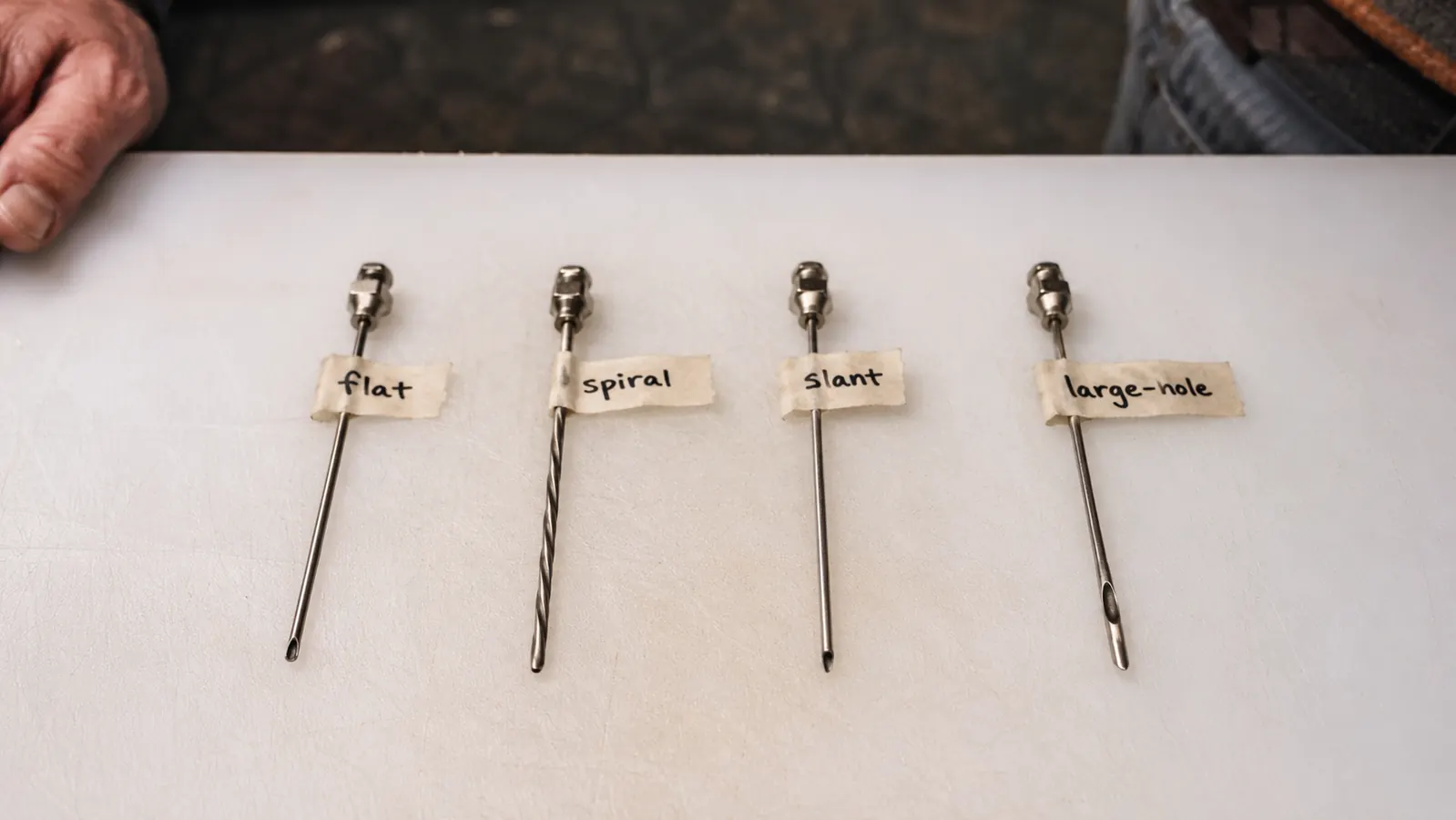
| Needle Count and Types | 4 needles: spiral, slant-tip, large-hole, flat | 1 or 2 needles: standard slant-tip only |
| Needle Material | 304 stainless steel, heavier gauge | Stainless steel, thinner gauge |
| Cleaning Method | Fully dishwasher safe; all parts disassemble | Hand-wash only; barrel can cloud or warp |
| Durability | Does not crack, rust, or stain over multiple seasons | Barrel yellows and can crack after heat exposure or drops |
| Current Price | Check today's price on Amazon | Budget-friendly, varies by version |
| Grip and Comfort | Thumb-ring plunger, wide grip ring, solid feel under pressure | Pistol-grip style; comfortable but flexes under hard pressure |
| Clog Resistance | Spiral needle disperses thick marinade through side holes, rarely clogs | Single end-hole clogs with herbs, pulp, or chunky marinades |
Where the Ofargo Wins Outright
The needle kit is the biggest thing. I cannot tell you how many times I clogged a single-hole injector trying to get a butter-and-herb mixture into a pork butt. You pull back on the plunger, the herb leaf blocks the tip, you push harder, the marinade shoots sideways, and suddenly your brisket has a spray pattern on the outside and bone-dry patches two inches in. The Ofargo spiral needle has holes distributed along the side of the shaft, not just at the tip, so thick liquids have multiple escape routes. Garlic bits, cracked pepper, even a thin apple-butter marinade all moved through it without stopping. I did two full 14-pound briskets this past Memorial Day weekend using a beef-broth-and-Worcestershire mix with a good bit of dried spice in it, and I did not clog once.
The stainless barrel is the second reason I keep reaching for the Ofargo. My old plastic Cajun Injector started showing stress marks along the barrel seam after about eight months. By the second summer, it had a hairline crack near the plunger channel and I had to toss it. Stainless does not do that. It dents if you drop it hard enough, but it does not crack, it does not yellow from fat exposure, and it does not absorb marinades so that the next cook starts with last month's garlic smell baked into the walls.
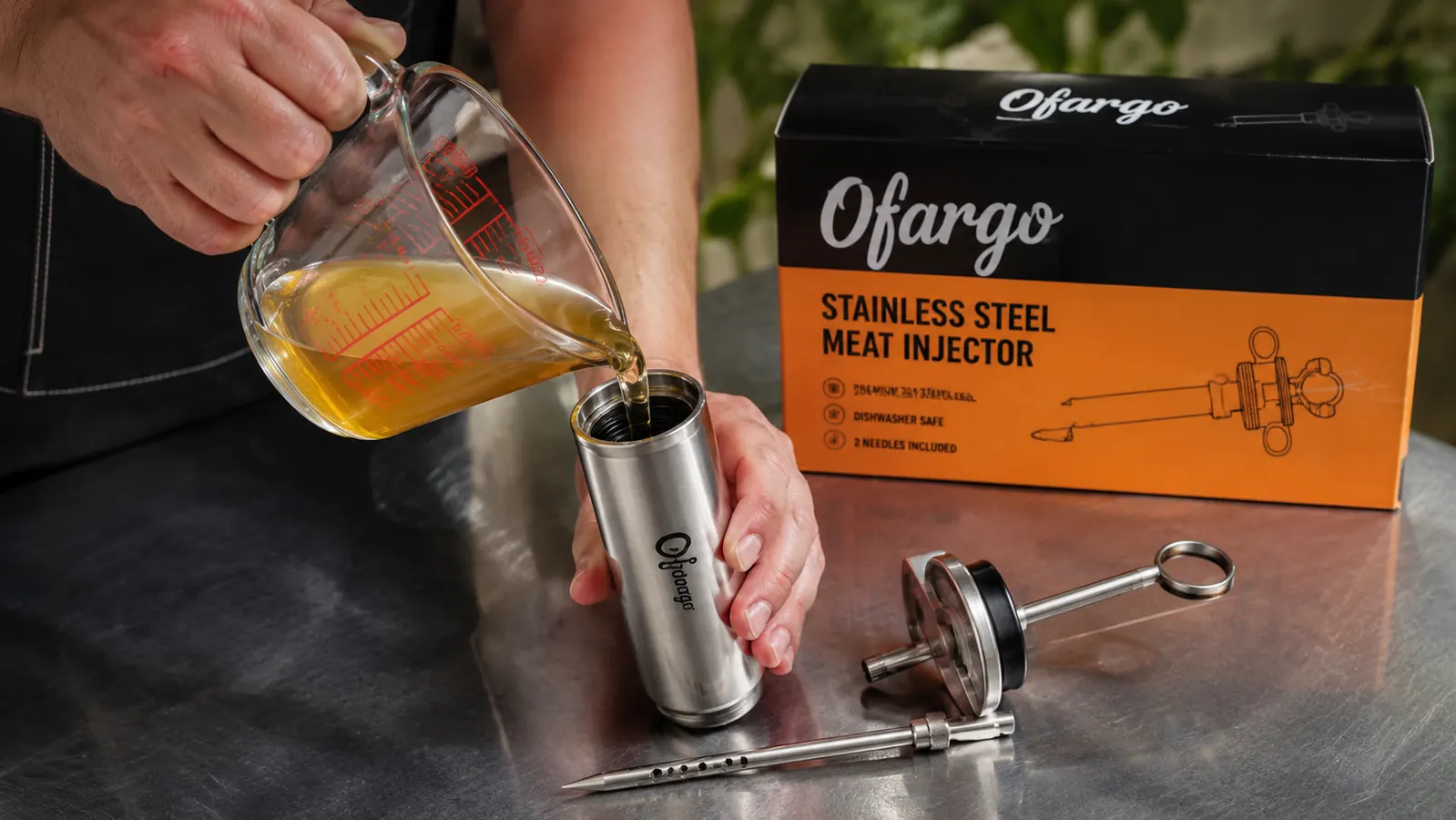
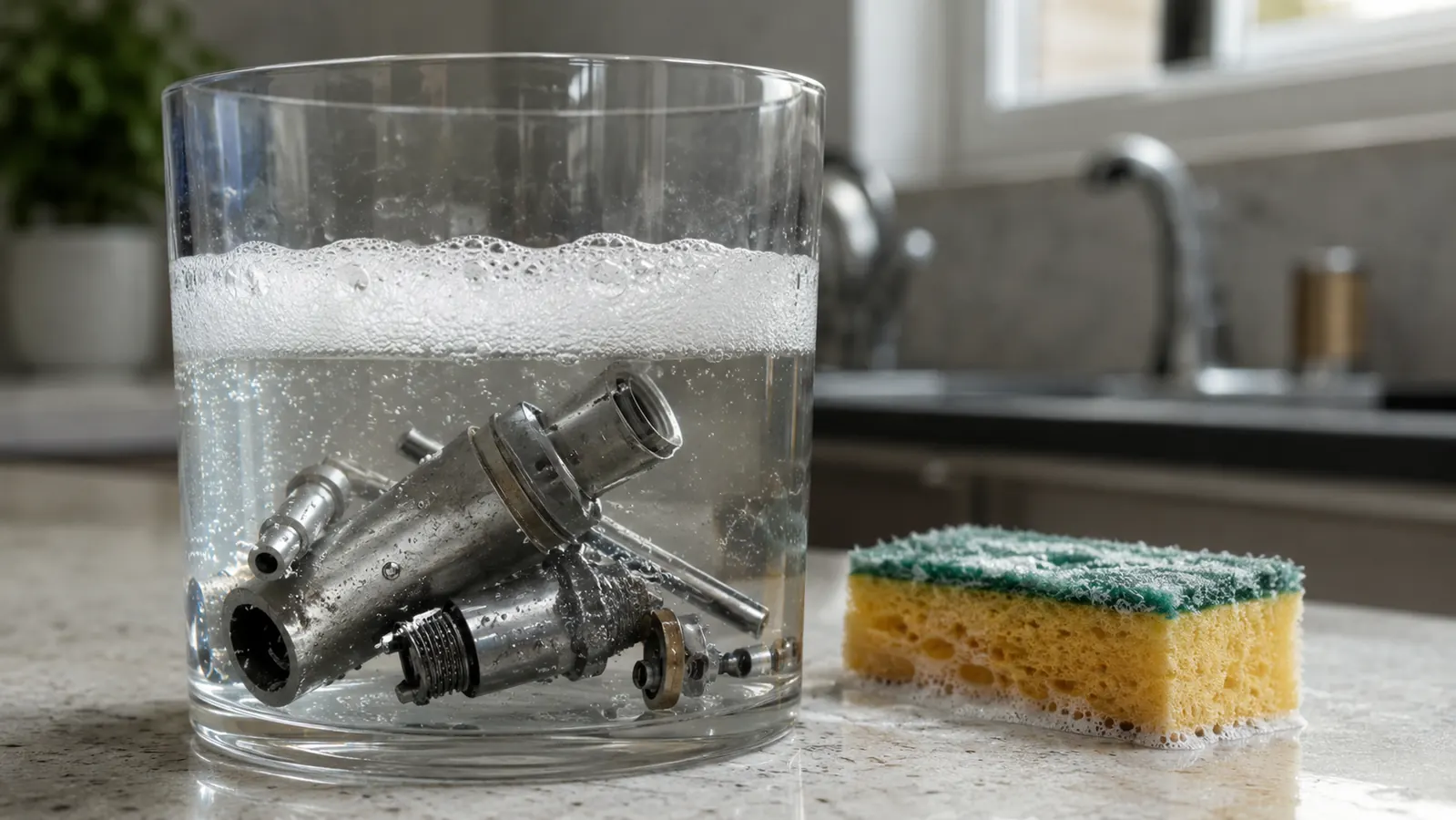
Cleaning is also easier than it sounds like it should be on a syringe. You pull the plunger out, drop both barrel pieces and all four needles in the top rack of the dishwasher, and you are done. Every single part is listed as dishwasher safe by Ofargo, and I have run mine through well over fifty cycles at this point with no warping, no staining, and no seal failure. The Cajun Injector manual specifically says to hand-wash only. That is not a dealbreaker, but when you have a full post-BBQ cleanup ahead and your hands are already greasy from pulling pork, the last thing you want is one more item that needs special handling.
Where the Cajun Injector Still Has a Case
The price is the obvious one. If you have never injected a piece of meat in your life and you want to try it once before committing to a premium kit, the Cajun Injector is a perfectly reasonable entry point. It holds the same amount of liquid, it has a needle that works fine with thin marinades like apple juice, Worcestershire, or plain chicken broth, and it gets the job done. The pistol-grip design is comfortable in the hand, especially if you are doing a lot of injections in a row on a big bird or a bone-in pork shoulder.
The Cajun Injector also comes prefilled with the brand's injectable creole butter marinade in some versions, which is a genuine shortcut if you do not have a go-to injection recipe yet. That creole butter is actually pretty good on chicken thighs. So as a starter kit or a gift for someone who is just getting into BBQ, it checks out. The problem is longevity and versatility, and that is where it loses to the Ofargo over any meaningful time horizon. You will likely replace it within two summers, and at that point you have spent just as much money, but you also lost two summers of cooking with better needles.
Your brisket has been dry enough. The Ofargo kit fixes that this weekend.
Four needle types, full stainless construction, and dishwasher safe. Over 5,600 verified Amazon ratings and it ships fast.
Amazon Check Today's Price on Amazon →The Clogging Problem Is Bigger Than You Think
I want to spend a little more time on this because it is the failure mode that will make you put the injector back in the drawer and never use it again. When a single-tip needle clogs mid-injection, you have a few bad options. You can pull the needle out and try to clear it, which means you just opened a hole in the meat that is now going to leak marinade. You can push harder, which builds pressure and often results in the marinade bursting out at the needle entry point instead of dispersing inside the muscle. Or you can thin your marinade down so much that it stops being flavorful just to get through the tip. I did all three of those things with the Cajun Injector at various points, and all three outcomes were frustrating.
The Ofargo spiral needle addresses this directly. The spiral design redistributes the marinade to side ports rather than forcing everything through one exit point, so back-pressure is lower and thicker mixtures move through without stalling. I have run my standard butcher injection through it without a single clog. That is a mix of warm beef broth, a small amount of melted butter, a pinch of MSG, and coarse-ground black pepper. It is thicker than apple juice and it has particulates in it. The Cajun Injector would have clogged on that within two or three plunger strokes. The Ofargo spiral needle kept going for all three refills across the full 14-pound flat and point without any stoppage.
Once I switched to the stainless kit with the spiral needle, I stopped thinning my marinades just to get them through the syringe. That one change made the flavor payoff worth the whole process.
Capacity: Is Two Ounces Enough for a Big Cook?
Both injectors hold two ounces per fill, which sounds small until you understand that a 14-pound brisket only needs about four to six ounces of total injection fluid. You refill the syringe two or three times, and you are done. The capacity is not the limiting factor. The technique is. You want to inject in a grid pattern, roughly every inch and a half, at multiple depths, withdrawing the needle slowly while depressing the plunger so the marinade distributes along the needle's entire path rather than pooling in one spot. Two ounces is more than enough per fill if you are working a proper grid.
Where the two-ounce limit does matter is for very large cooks, like a whole 20-pound hog or a dozen chicken quarters at once. For those situations, a larger-barrel commercial injector makes more sense. But for the backyard weekender doing a brisket or a pork shoulder on a Saturday, two ounces is exactly the right size. It keeps you from over-injecting, which is a real risk with big barrels and causes the meat to turn mushy rather than juicy, and it is easy to control pressure with one hand while you hold the meat steady with the other.
Long-Term Value: What You Actually Pay Per Season
This is the part people skip when they see a modest price difference. If you cook at any kind of regular pace, say twenty-five to thirty large cooks a year (that is roughly once a week from March through October), the Cajun Injector plastic barrel is likely to show wear within the first twelve months. The plunger seal can start dragging, the barrel can develop micro-cracks that become actual cracks, and the smell retention from past marinades can start affecting your food. When that happens, you buy another one. Over two seasons, you have spent close to what the Ofargo costs, but you have also lost the needle versatility for the entire period. The Ofargo barrel shows no signs of wear after my full summer of use plus the start of this year. It looks essentially the same as it did on first use. That matters when you are cooking for family every weekend and you want tools you can rely on without inspecting them first.
The other thing worth noting is that the Ofargo kit stores well. The needles and barrel fit back into the plastic case that ships with the kit, so none of the needles rattle loose in a drawer and the tips stay protected. Needle tips are surprisingly fragile, even on stainless. If a spiral needle gets bent or the slant-tip gets dinged on a hard surface, it will not seat properly into the barrel, and you lose the seal. The included case prevents that. The Cajun Injector does not include a dedicated storage case in most versions, so the needle usually ends up loose in a kitchen drawer, which is how tips get damaged.
Who Should Buy Which
Buy the Ofargo if you are past the curious-beginner stage and you want an injector that will last through multiple seasons without cracking, cleaning without special treatment, and handling thick marinades without clogging. The four-needle kit covers every realistic injection scenario: the spiral needle for thick or herby mixtures, the slant-tip for thin liquids, the large-hole needle for chunky marinades like creole butter, and the flat needle for loose-walled muscles like chicken breasts. The stainless construction is the deciding factor for me. I have seen too many plastic barrels crack in a kitchen drawer or take on a permanent off-taste after a couple seasons of heavy use.
Buy the Cajun Injector if you have never injected a piece of meat in your life, you want to spend the minimum to see if the technique even appeals to you, and your go-to marinades are thin liquids like apple juice, Worcestershire, or store-bought poultry broth. It will do the job for that purpose. Just know that the longevity ceiling is lower and the needle versatility is not there if you want to graduate to more complex injection recipes. Most people who start with the Cajun Injector upgrade within a season or two anyway, so the value case for spending the extra upfront on the Ofargo is strong if you already know you are committed to injecting regularly.
Ready to stop settling for dry centers? The Ofargo kit is the right upgrade.
Stainless barrel, four specialized needles, and fully dishwasher-safe construction. Rated 4.7 stars by more than 5,600 BBQ cooks on Amazon.
Amazon Check Today's Price on Amazon →