
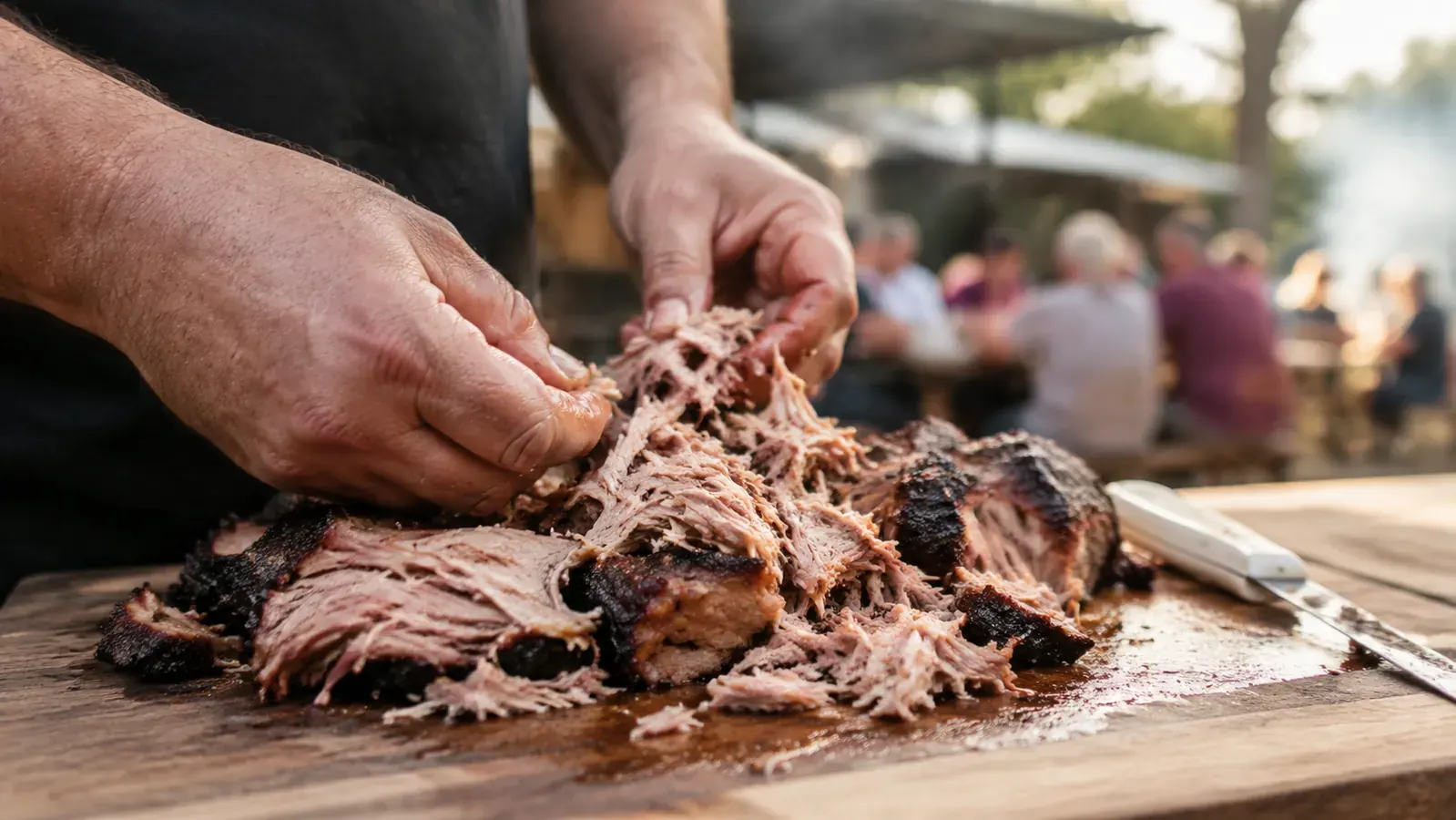
I have been cooking pork shoulder for my family since my dad handed me the tongs at one of his Fourth of July cookouts back in 2001. He showed me his rub recipe, told me low and slow was the whole game, and sent me home with a bag of hickory chips. For about twenty years, I followed that same routine. And for about twenty years, my pulled pork was pretty good right at the surface, then kind of dry and stringy once you got into the middle. I figured that was just how pork shoulder worked. Turns out I was wrong. The fix was an Ofargo meat injector I picked up on Amazon, and I want to tell you exactly how I found it and what changed.
It was my niece Cassidy's graduation party, May of last year. I had an eight-pound bone-in shoulder on my offset smoker by six in the morning. Everything looked right. Nice bark forming by noon, internal temp climbing steady. I pulled it at 203 degrees, wrapped it in a towel, and let it rest in a cooler for an hour like I always do. When I set it on the table and started pulling, the outer third was juicy and perfect. The middle? Dry. Stringy. I watched my brother-in-law reach for the extra sauce bottle and I felt it in my chest. Nobody complained out loud, but you know your own food.
The outer third was juicy and perfect. The middle was dry and stringy. I watched my brother-in-law reach for the sauce bottle and felt it in my chest.
That night I started reading about why big cuts dry out in the center. The short answer is that a dry rub and even a long brine only penetrate about a quarter inch into the meat. The interior of a pork shoulder is spending eight to ten hours losing moisture with nothing coming in from the outside to replace it. The solution that kept coming up in every forum and pitmaster write-up I found was injection. Push a liquid marinade directly into the muscle tissue before the cook, and the center has its own moisture reserve to draw from. Simple physics I had never thought to apply.
Stop losing moisture from the center of every big cut you smoke.
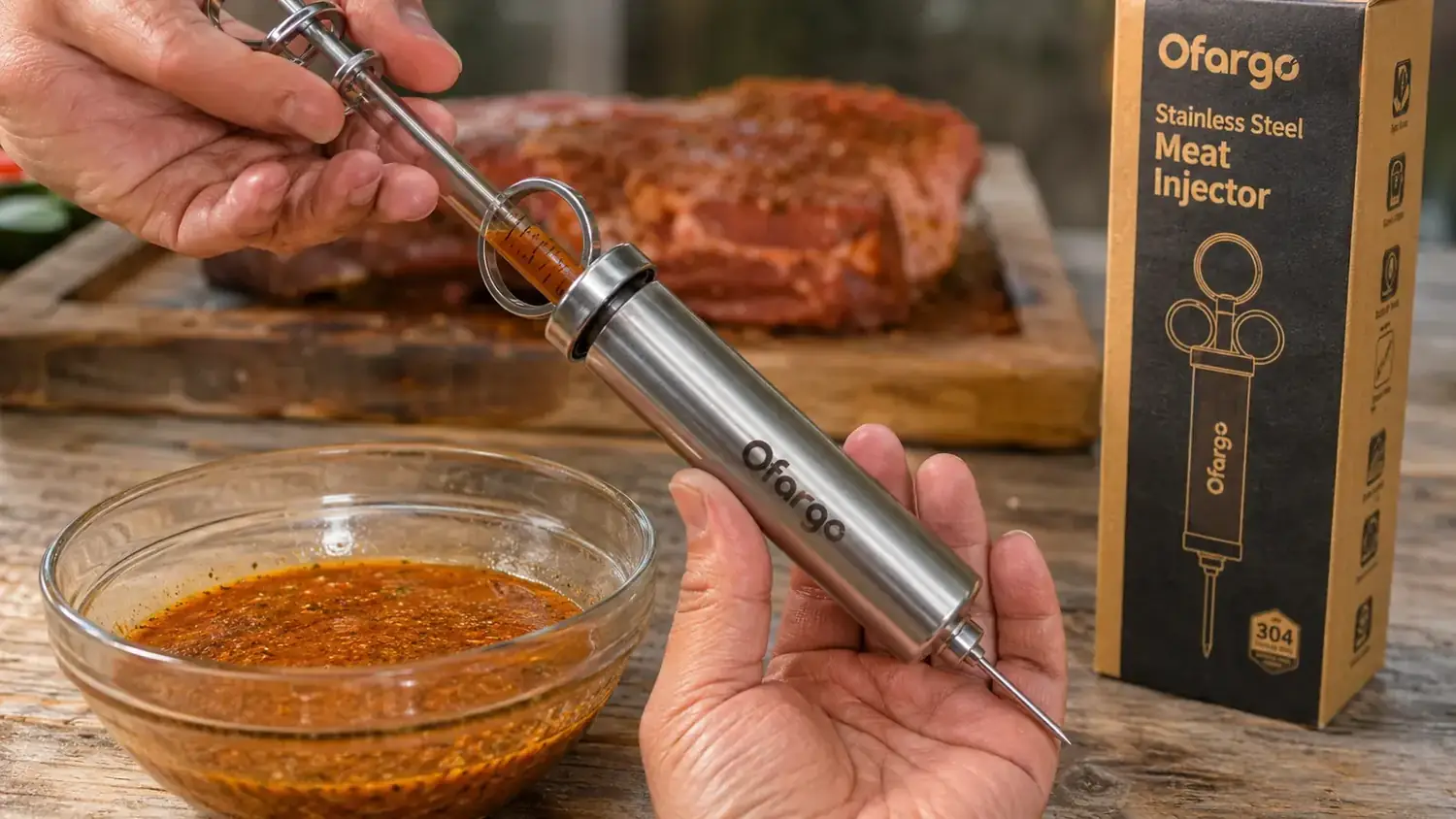
The Ofargo stainless steel injector kit comes with four needle types for different marinade thicknesses, a 2-oz barrel, and a case that keeps everything organized between cooks. It has over 5,600 ratings on Amazon at 4.7 stars.
Amazon Check Today's Price on Amazon →I ordered the Ofargo kit a few days after that party. What showed up was a sturdy stainless steel syringe with a 2-ounce barrel and four different needles: one straight tip for thin liquids, one with a curved end, one with multiple side holes for thicker marinades that would clog a single-tip needle, and a flat blade needle for butter-based injections. Everything came in a hard plastic case with molded slots for each piece. I am not usually someone who keeps all the little accessories together, but the case made it easy. Six months later, everything is still in there.
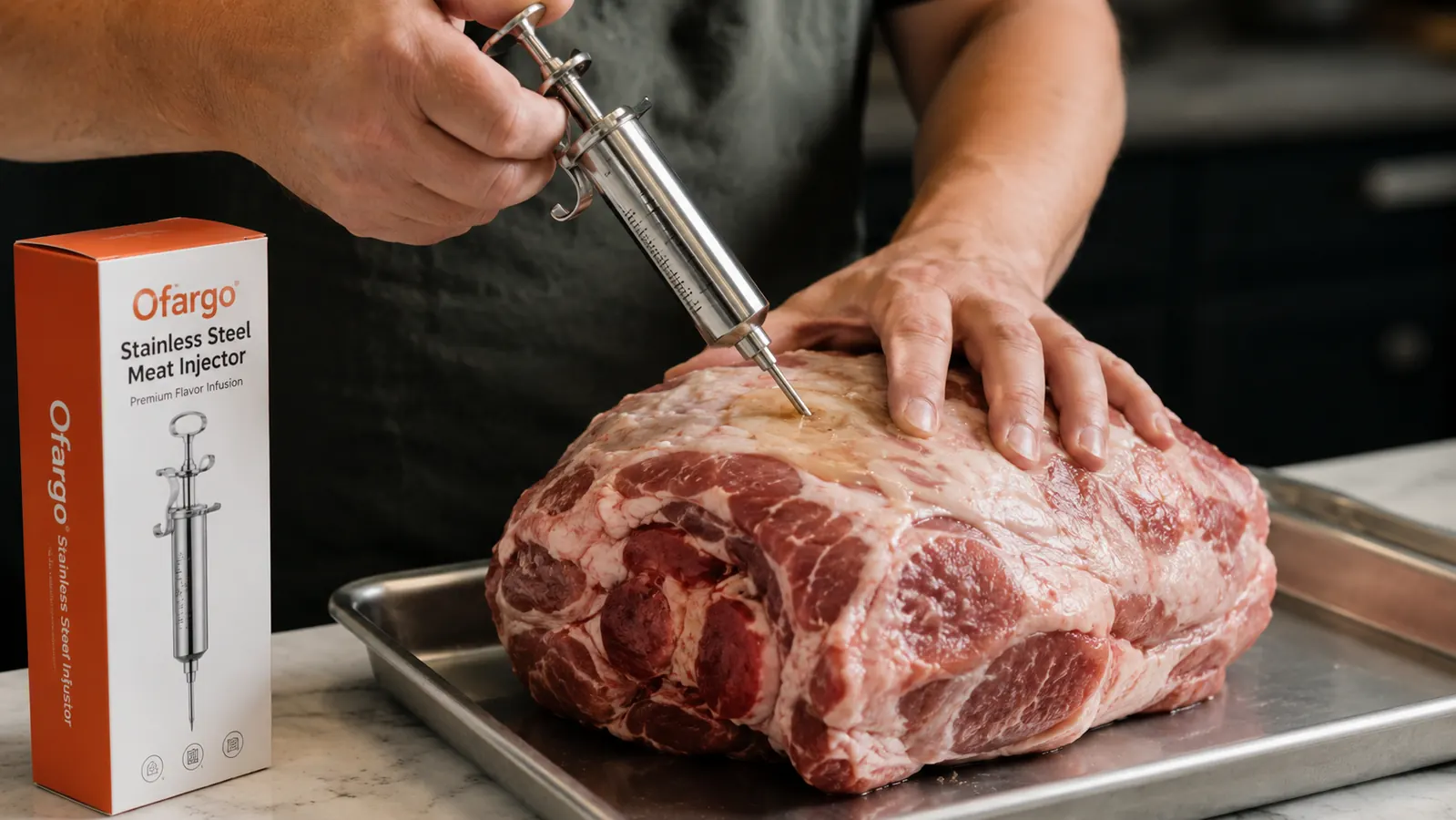
The night before Cassidy's graduation party (I did a second cookout a month later to make it right), I mixed up a simple injection: one cup of apple juice, two tablespoons of Worcestershire sauce, two tablespoons of melted butter, a teaspoon of kosher salt, and a half teaspoon of the same dry rub I use on the outside. Strained it through a fine mesh sieve so it would flow clean through the needle. Then I loaded the barrel, pressed the long needle into the thickest part of the shoulder at about a 45-degree angle, and slowly depressed the plunger while pulling the needle back out. You do a grid pattern across the whole cut, every inch or so, maybe six to eight injections per pound. It took me about seven minutes for an eight-pound shoulder. Then I rubbed it, wrapped it in plastic, and put it back in the refrigerator overnight.
What came off the smoker the next afternoon looked exactly like every other pork shoulder I had ever cooked. Same bark, same color, same probe feel at 203 degrees. But when I started pulling it, the whole thing was wet all the way through. Not soggy, not saucy. Just genuinely moist the way pulled pork is supposed to be. My sister asked me what I did differently. My brother-in-law did not touch the sauce bottle. I handed out three servings before I sat down and ate my own plate. That is the best outcome you can get from a backyard cookout.
What I'd Tell You If We Were Sitting at My Kitchen Table

Here is the honest version. The Ofargo injector is not a complicated piece of equipment. It is a syringe. You fill it up, you stick it in the meat, you push the plunger. The reason it works is not the tool itself, it is the technique. If you have been cooking big cuts for years and the center always comes out a little dry, injection is the missing step. No rub, no brine, no foil wrap, no water pan in the smoker fixes the physics problem of getting moisture to the center of a six-to-ten-pound piece of meat. Injection does.
The one thing I will say about the Ofargo specifically: do not skip cleaning it right after your cook. The barrel and needles are all stainless, so they hold up to the dishwasher, but get the marinade rinsed out before it sits overnight or the small holes in the side-port needle can gunk up. Takes thirty seconds at the sink. Do that and it will last you for years. I have used mine on brisket, on whole chickens before a beer-can cook, and on a pork loin for Christmas. Same result every time. The center stays where it belongs.
If you are cooking for a crowd this summer and you want to stop hoping the middle comes out okay, this is the tool. It is inexpensive, it takes five minutes the night before, and the people at your table will notice. Not because you told them you injected it. Because it tastes right all the way through.
Want pulled pork that's juicy from the surface to the bone?
The Ofargo meat injector kit is what I use every time I smoke a large cut now. Four needle types, all stainless, easy to clean, and small enough to store in a drawer. Check the current price and reviews on Amazon.
Amazon Check Today's Price on Amazon →