
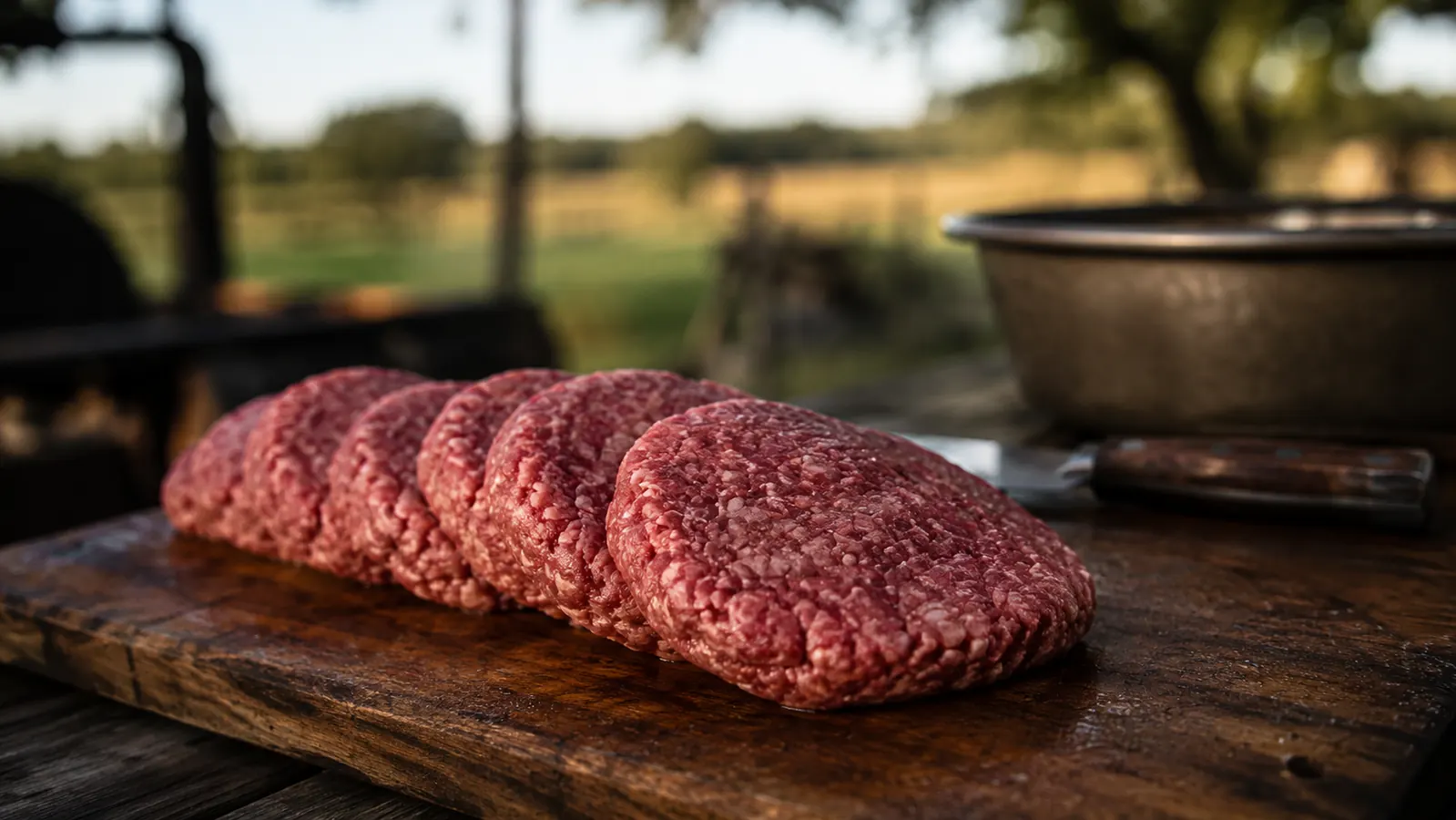
My neighbor Roy brought a bag of frozen pre-formed patties to our Memorial Day cookout and I had to bite my tongue. Thick in the middle, thin at the edges, falling apart when he tried to flip them. I had been pressing my own patties with the Meykers burger press since early May and the difference on the grill grate was obvious. His were domed and steaming. Mine were flat, even, and picking up a proper char on every inch of the surface. After five months and somewhere north of 120 patties, I can tell you exactly what this little plastic press does well, where it falls short, and whether it belongs at your backyard grill setup.
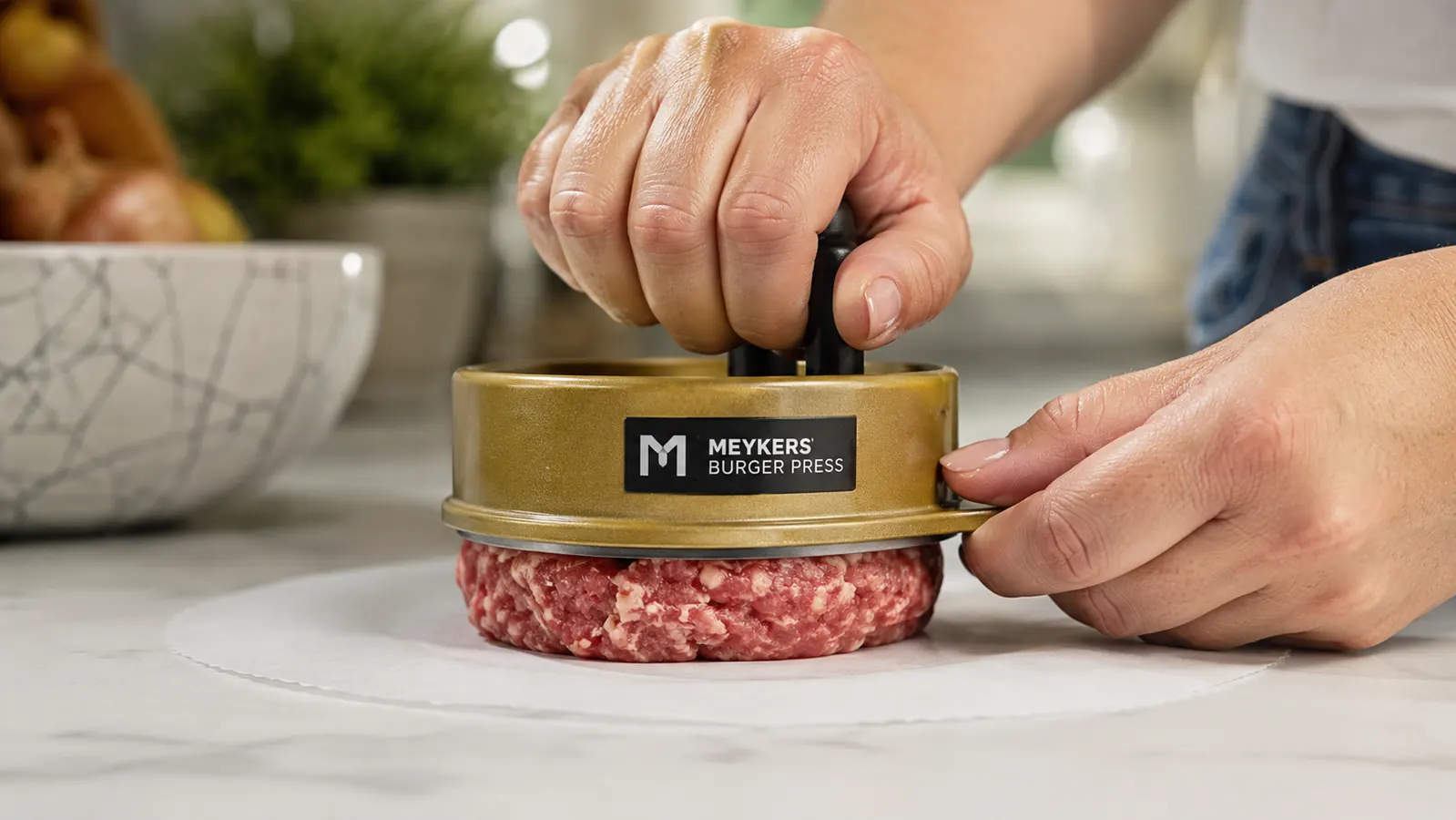
The Meykers burger press is a non-stick plastic patty mold that ships with 150 wax patty papers. The press runs about eight or nine dollars at current price, which makes it one of the cheapest tool upgrades you can make to your burger game. I bought it because I was tired of hand-shaping patties for eight or ten people, ending up with lumpy ovals that cooked unevenly. I stayed with it because the results on the grill were genuinely better than anything I was doing by hand. At 4.6 stars across more than 7,000 ratings on Amazon, I am clearly not alone in that conclusion.
The Quick Verdict
A reliable, no-fuss patty press that delivers consistent flat patties every time. The non-stick coating holds up through a full summer of weekly use. Just budget for replacement patty papers before you run out of the included 150.
Amazon Check Today's Price →Tired of hand-shaped patties that cook unevenly every single time?
The Meykers burger press ships with 150 wax patty papers so you can start pressing consistent, flat patties right out of the box. At current price it is one of the easiest grill upgrades you can make this season.
Amazon Check Today's Price on Amazon →How I Have Used It This Summer
I put the Meykers press through what I would call normal heavy use for a West Texas family cookout. Most weekends from early May through the end of August meant burgers at least once, sometimes twice if I had the grandkids visiting. That breaks down to roughly 25 to 30 separate cook sessions, anywhere from six patties to a full batch of twelve for a crowd. I used it on 80/20 ground chuck from the grocery store, on 73/27 when the store was running a special, and on a ground brisket blend I picked up from a local butcher twice. I also used it for smash burgers, which means pressing the patty directly onto a screaming hot cast iron griddle rather than shaping it in advance. More on that in a minute.
Storage between sessions was a kitchen drawer, not a cabinet. The press got tossed in with my tongs and spatulas, got bumped around, and occasionally ended up under a stack of foil. I did not treat it gently. After every use I washed it by hand with dish soap and a soft sponge. I never put it in the dishwasher, mostly because the instructions suggested hand washing and I wanted to see if the non-stick coating held up under that basic routine. It did.
By the end of the summer the non-stick surface had no visible scratching, no peeling, and no sticky spots that would cause beef to grab. I was careful never to use a metal spatula inside the press cavity, which would have scratched it immediately. The patty papers handle that risk anyway. As long as you lay a paper down before pressing, nothing sticky contacts the surface directly.
What the Patty Papers Actually Do (And When They Run Out)
The included 150 wax patty papers are not a bonus accessory. They are load-bearing. The papers sit between the ground beef and the press surface, which serves two purposes: the beef releases cleanly every single time, and you can stack pressed patties in the fridge or freezer without them welding together into one pink slab. I froze pre-pressed patties in batches of four for quick weeknight burgers and the papers made it possible to peel them apart straight from frozen without any tearing.
I burned through the 150 included papers by early July. At my pace that took about nine weeks. Replacement papers are easy to find online and inexpensive, roughly five to seven dollars for 1,000 sheets. Meykers sells their own branded replacement packs. I also tried generic 5.5-inch wax deli squares from a restaurant supply store and they worked identically. Do not try to skip the papers and press directly onto the non-stick surface. The beef grabs the rim when you lift the press and the patty tears on one side. I tested this once out of curiosity and once was enough to convince me the papers are not optional.
Consistency: The Actual Reason to Own This Press
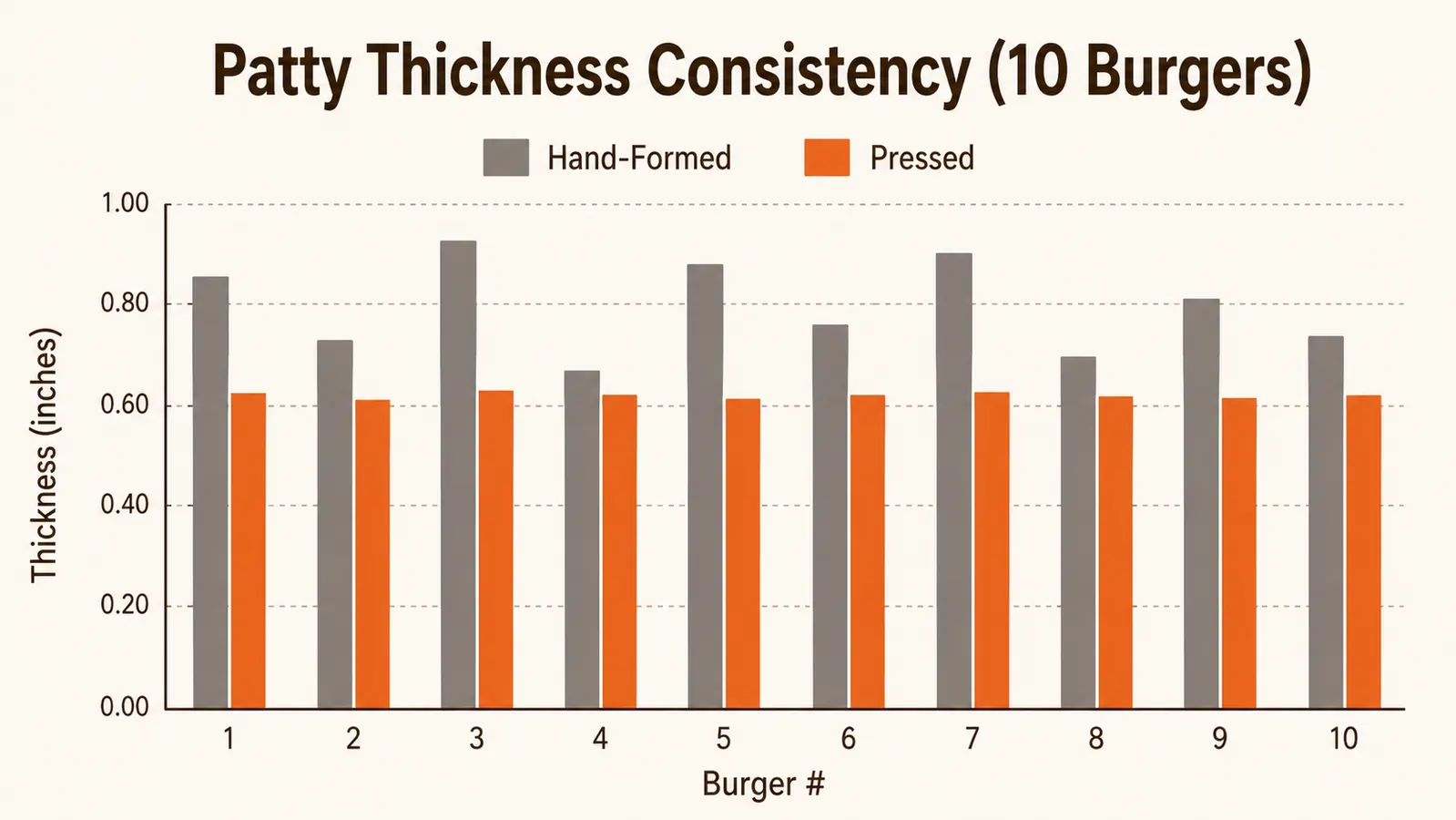
Before I had the press, my hand-shaped patties varied by about a quarter inch in thickness from one to the next. That does not sound like much until you are cooking a dozen patties on a grill that runs hotter in the back right corner. The thin ones overcook while you are waiting for the thick ones to reach temperature. With the Meykers press, every patty that comes out of the mold is the same diameter and very close to the same weight, because I am portioning by eye into roughly equal balls before pressing. The finished thickness depends on how much beef I start with: about five ounces gives me a classic half-inch patty, and about four ounces gives me a thinner smash-style disc that crisps up nicely on cast iron.
The diameter is locked at 4.25 inches. That fits a standard burger bun without any overhang. Brioche buns, potato rolls, standard sesame seed buns. All of them match. My family started noticing the burgers looked more like a restaurant plate than a backyard cookout and I will admit that mattered to me more than I expected. There is something about a perfectly round, evenly thick patty that makes people reach for a second one.
After pressing well over 100 patties, the non-stick surface shows zero scratching and zero peeling. A hand wash with dish soap after every session is all it needed.
Smash Burgers: Where This Press Earns Its Money
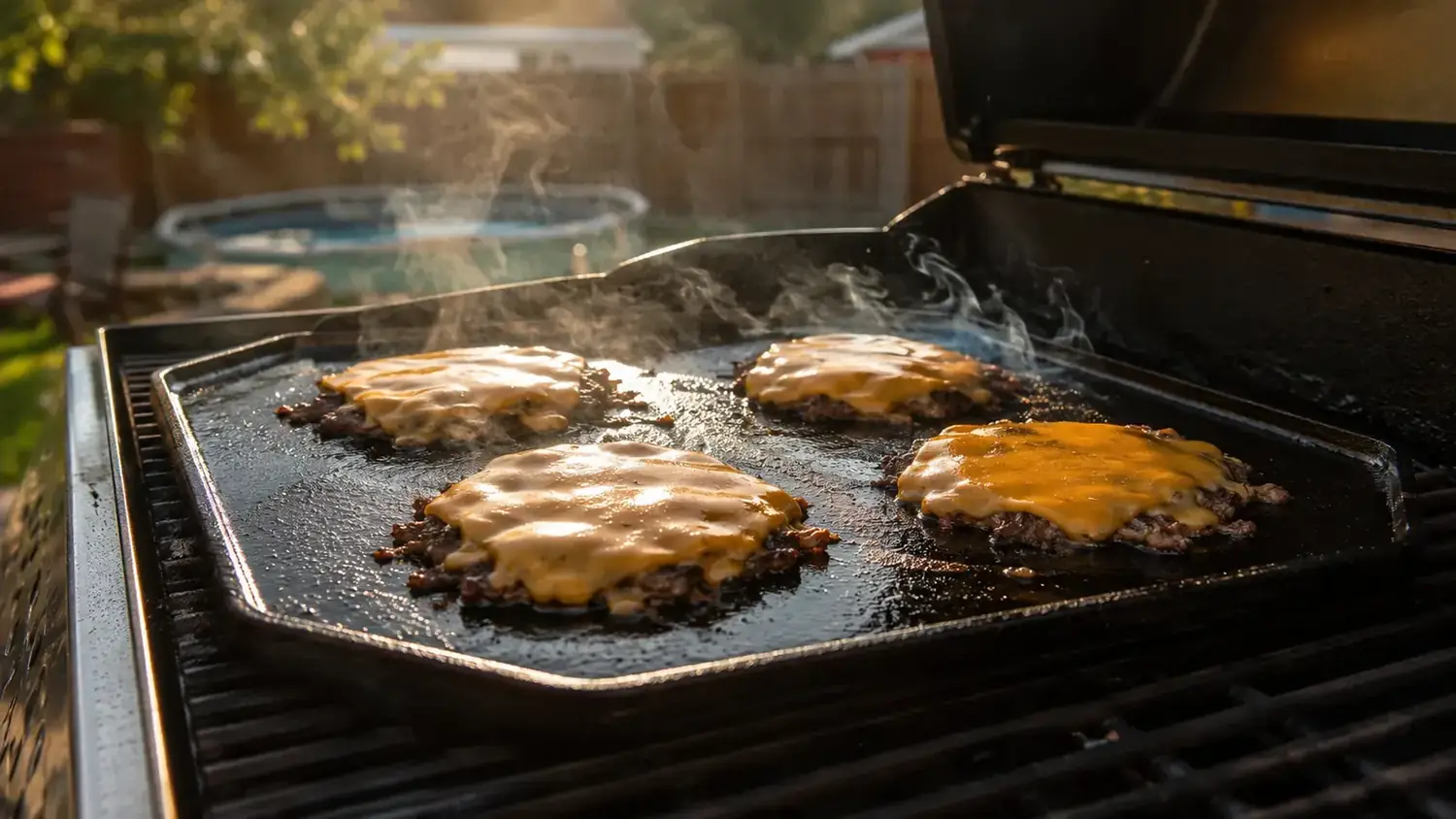
I did not buy the Meykers press specifically for smash burgers. I bought it for regular-thickness patties. But somewhere around week three I started pressing loose two-ounce balls directly onto a cast iron flat top set over my gas grill burners, and that changed everything. The smash technique requires you to press a ball of beef as thin and flat as possible the moment it hits the screaming hot surface, which creates a large crust-to-meat-mass ratio and a richer Maillard crust than you get with a thick patty. The Meykers press handles that step perfectly. You set a patty paper on top of the beef ball, press the mold down hard, and the patty spreads to the full 4.25-inch diameter in under two seconds.
The handle is plastic and it gets warm after a few consecutive presses on a very hot surface. Not burn-your-hand warm, but uncomfortable enough that I started wrapping a folded kitchen towel around the handle after my third smash session. That is a real ergonomic complaint worth knowing before you buy. A silicone-wrapped or wooden handle would be a meaningful upgrade on this product. For the price it is a minor gripe, but it is the one thing I genuinely wish Meykers had addressed for people who use this near high heat.
If you want a step-by-step guide to the smash burger technique on a gas or charcoal grill, I put together a full walkthrough at the how to make perfect smash burgers at home guide. The Meykers press is the tool I recommend there for the press-down step.
How the Press Holds Up Over a Full Season
Five months in, here is the honest durability report. The non-stick coating on the press cavity and the flat disc that actually contacts the beef is intact. No chipping, no discoloration, no rough patches where the coating has softened. The hinge mechanism that connects the handle assembly to the pressing disc is still firm with no wobble. I expected it to loosen over time the way cheap hinges do, but it has not. The outer rim of the mold, which shapes the edge of the patty, has one faint cosmetic scuff from being dropped on my concrete patio in June. That scuff does not affect function in any way.
The one structural note worth making: this is food-grade plastic, not metal. It will not crack under normal pressing force, but if you set something heavy on top of it in a drawer or in a camp box during transport, it can warp slightly. Mine warped just enough in mid-July to leave a faint thicker ring around the edge of patties. I eventually traced it back to my cast iron skillet sitting on the closed drawer that contained the press. Once I started storing it flat and unsquished, the warp corrected on its own over a few days. Plastic has some memory. The practical lesson: do not bury it at the bottom of a pile of gear.
Alternatives I Considered and Why I Stuck With This One
I looked at the Cuisinart adjustable patty maker before buying and decided against it for two reasons. First, the price difference is significant for what is ultimately a simple pressing task. Second, the adjustable thickness mechanism adds moving parts that I do not need, since I control thickness by adjusting my meat portion size. I also looked at the Weston cast-iron burger press, which is heavier and better suited for dedicated smash burger stations on a commercial flat-top. If I ran a food truck or a food stand I would buy the Weston without hesitation. For a home backyard gas grill, the added weight and price premium did not make sense. The Meykers handles everything I throw at it and it costs a fraction of either alternative. If you want a detailed side-by-side breakdown, I covered the full Cuisinart matchup in the Meykers vs Cuisinart patty maker comparison.
A few people at my cookouts asked why I did not just use a smaller bowl or the bottom of a drinking glass to shape patties the way my mother used to. The honest answer is that a bowl or glass leaves a concave surface in the center of the patty and the edges end up thicker. That means the center of the burger cooks slower than the edges. The press mold leaves a genuinely flat, even surface because the disc contacts the beef uniformly from rim to center. That consistency matters when you are chasing a repeatable medium cook across a dozen patties all at once.
What I Liked
- Consistent 4.25-inch diameter patties every single press with no variation
- Non-stick surface holds up through months of weekly use with simple hand washing
- 150 included patty papers cover a full month or two of regular grilling before you need replacements
- Works for smash burgers pressed directly onto cast iron, not just standard pre-formed patties
- Pressed patties stack and freeze cleanly with the wax papers between them
- The price makes it a zero-risk purchase for any backyard cook who grills burgers regularly
Where It Falls Short
- Plastic handle gets warm during smash burger sessions at high heat, needs a towel to hold comfortably
- Single fixed diameter, no option for slider-size or oversized pub-style patties
- Included 150 papers run out faster than expected if you grill burgers frequently
- Food-grade plastic is susceptible to slight warping under storage pressure, though it corrects on its own
Who This Is For
The Meykers burger press is the right call for anyone who grills burgers more than a handful of times a summer and is tired of hand-shaping uneven patties. It especially shines if you cook for a crowd of six or more people, where consistency across the whole batch means everyone's burger finishes at the same time and nobody is waiting on the thick one in the back corner. It is also a genuine upgrade for anyone who wants to try smash burgers at home without investing in a dedicated heavy-duty press. The price keeps it firmly in impulse-buy territory, and once you press your first clean, even batch you will not want to go back to hand-forming.
Who Should Skip It
If you want to make slider patties for a party, the 4.25-inch diameter is too large for most slider buns. You would need a smaller specialty press for that application. If you are set on a thick pub-style half-pound burger, the mold will technically press eight ounces of beef but the disc barely contacts the center of that much meat and the edge shape suffers. A thick patty is better formed by hand. And if you are a serious smash burger cook running multiple sessions per week on a flat-top at very high temperatures, a heavy cast-iron press is worth the extra cost for the thermal mass and a metal handle that will not get warm on you.
Ready to press your first batch of consistent, flat backyard patties?
The Meykers burger press ships with 150 wax patty papers included. At current price, it is one of the best low-cost upgrades for weekend grillers who want restaurant-quality burger shape without any extra fuss.
Amazon Check Today's Price on Amazon →